






Clear order

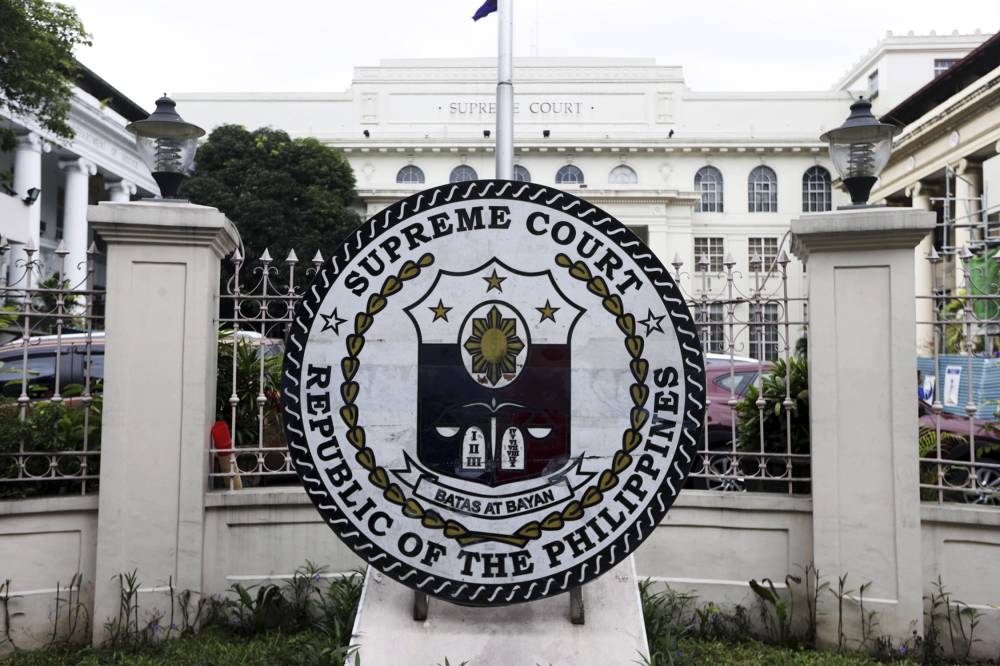
The order was clear and blunt. “Henceforth and with utmost urgency,” the Supreme Court said in its landmark ruling handed down Aug. 26 and released Sept. 16, the Congress of the Philippines must “enact the appropriate anti-political dynasty law at the earliest opportunity.”
In the 86-page decision penned by Associate Justice Ramon Paul Hernando, the SC granted the three consolidated petitions filed by the 1Sambayan Coalition led by retired Supreme Court Senior Associate Justice Antonio Carpio and retired Ombudsman Conchita Carpio Morales, along with the Kapatiran Party and other groups of legal scholars and civic leaders who had petitioned the tribunal to compel Congress to finally pass a law defining and prohibiting political dynasties.
The requirement for such a law is in the Constitution itself. Article 2, Section 26 provides that the “State shall guarantee equal access to opportunities for public service and prohibit political dynasties as may be defined by law.” At the time the framers of the 1987 Constitution were writing the Charter, the scourge of political dynasties was already all too evident that they had to explicitly mention the need to prohibit the practice.
Concentration of political power
The framers rightly recognized that the concentration of political power and public office within the same family or clan could only do immense harm to the country’s democracy and socioeconomic progress.
They made a fatal hedge, though, with that phrase “as may be defined by law.” The clause left it up to the enlightened instincts of the people’s representatives in Congress to do the actual work of enacting legislation that would flesh out the provision. As it turned out, the framers’ trust was wildly misplaced.
Lawmakers, most of them products of political dynasties themselves, were not about to vote against their narrow, short-term self-interests by advancing any measure that would meaningfully clip their hold on power and privilege.
But after 39 years of the fundamental directive being ignored, the SC said enough of the dillydallying. Every Congress through the years has been negligent in complying with “the mandatory constitutional duty to enact the law,” and what has happened since then? Political dynasties “have remained widespread and have extended even into the party-list system,” the court said, noting that the practice was “distorting democracy, weakening accountability, and fostering conditions conducive to corruption and political patronage.”
Ringing reprimand
“Despite changes in the composition of Congress over the years, no comprehensive anti-political dynasty law has been enacted, implying either a lack of interest, avoidance for convenience, or service of self-interest,” it lamented. Thus, “39 years is beyond a reasonable period to carry out the constitutional command,” the SC declared, and Congress’ failure to act “constitutes grave abuse of discretion.”
That ringing reprimand should land on the doorsteps of the legislative houses like a thunderclap. If generations of lawmakers had seen fit to ignore all this time the citizenry’s calls for a broad antidynasty law that would help democratize political power and public service, they cannot do so now, with the country’s highest judicial authority telling them they are guilty, at the very least, of constitutional disrespect and dereliction of duty.
The SC didn’t only confine itself to ordering Congress to get off its bum and get to work. It also said that, based on existing laws, “there is basis to extend the prohibition on political dynasties to relatives up to the fourth civil degree of consanguinity and/or affinity”.

The roadmap, then, for both the House and Senate is clear: Urgently pass a law that unambiguously bans political dynasties by prohibiting spouses and relatives up to the fourth degree of consanguinity and/or affinity from simultaneously holding elective posts.
Hair-raising numbers
House Bill No. 8389, which was passed on third and final reading on June 3 this year, simply would not do, because it limits the ban only to the second degree, practically providing cover for ever-creative politicians to circumvent the intent of the prohibition. The Senate’s pending counterpart bill is of a similar vein, though aside from barring the simultaneous holding of positions by family members, it also prohibits immediate succession after a relative steps down from a certain post.
These two measures don’t go far enough yet in addressing the menace that has held the country’s political system in an ever-tighter grip over the decades. Consider: In a country of some 113 million people, the 24-strong Senate is currently populated by four sibling pairs, while 76 percent of House members come from political dynasties.
Those are truly hair-raising numbers for any nation that imagines itself to be a democratic republic. Filipinos have long called for correcting that unjustly lopsided landscape, and now the SC has taken the cudgels for them. Congress must heed the court’s order forthwith.