



Indispensable job

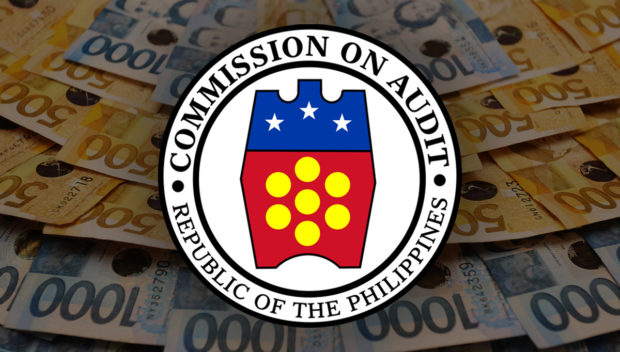
Working for the Commission on Audit (COA) may feel like one of the loneliest jobs in government. There’s the arcane nature of the work, first of all—or what looks like it. Complicated accounting and auditing procedures are not the ordinary subject of conversation. The agency’s mandate—to examine, audit, and settle all accounts pertaining to government revenue, expenditures, and public property—requires specialized knowledge, not only of general accounting principles that are the basic foundation of an accountant’s education, but of the tangle of laws and regulations that govern public transactions.
Its job—which involves, as a matter of course, poring over receipts, voluminous documents, convoluted language in pertinent regulations, the trail of accountability from one approving authority to another—is not flashy work. The COA does not announce or implement arrests of suspects. It does not hold press conferences to trumpet this or that metric of accomplishment. It does not scramble to explain its terms every time a politician or his or her mouthpiece bandies them about on TV or on social media.
Political hit job
Take “Unqualified Opinion” or “Unmodified Opinion.” That technical term—meaning that the paperwork submitted by an agency to COA to explain its spending was presented fairly and follows accounting standards—has been wielded these past years by supporters of Vice President Sara Duterte to dismiss the allegations of misuse and irregularities she faces in her use of millions in confidential and intelligence funds. Why, just this July, they crowed, the Office of the Vice President (OVP) obtained an “unmodified opinion” from state auditors for the fourth straight year, so how could the VP be corrupt? Demanding that she account for the secret funds disbursed by the OVP and the Department of Education she once headed is, according to them, plainly a political hit job designed to take her down.
As the ongoing impeachment trial of the VP has shown, however, using that terminology to try to exempt Duterte from a requirement all other government officials must comply with is a misleading, disingenuous argument. The COA itself has clarified on its website that an “unmodified opinion” is not a judgment or clearance that an agency is clean.
Reckless and irresponsible custodian
The distinction has become even more glaring at the impeachment trial, where, for instance, COA supervising auditor Xylene Mae del Campo has testified that Duterte herself is liable, along with her aides Gina Acosta and Julieta Villadelrey, for P73.287 million in disallowed disbursements that were made in just 11 days in December 2022.
Another COA auditor, Roderick Wamil, testified to more glaring discrepancies in Duterte’s liquidation documents. The public is familiar by now with the catalogue of alleged fund recipients with seemingly made-up names, but a less well-known inconsistency revealed by Wamil’s testimony was that some expenses submitted by the OVP were supposedly incurred between Dec. 13 and 18, 2022—days before the OVP officially received the P125 million allocation on Dec. 21, 2022.
Taken together, the irregularities surfaced at the trial so far paint a picture of the OVP as, at the very least, a reckless and irresponsible custodian of the people’s money, with the disarray in its liquidation reports betraying a blatant sense of impunity and a contempt for government auditing rules. More damning is Wamil’s citation of the law—that Duterte’s failure to properly account for public funds under her custody carries the presumption that the missing funds were used for her personal benefit.
Institutional guardrails
The defense tried mightily to attack the testimony of the COA auditors, but they were calm, steady, and steadfast on the witness stand. What the country saw were public servants who, unheralded, were in fact quietly but hard at work trying to safeguard the people’s money, ensuring that institutional guardrails were not only in place but were actually being enforced so that government transactions were conducted with utmost integrity, efficiency, and transparency.

That is an indispensable job, and a herculean one considering the scale of corruption prevalent in government. The COA deserves public support for its work. State auditors do not deserve, first of all, to be the subject of presidential threats or “jokes” of being kidnapped, tortured, or kicked down the stairs, the way former President Rodrigo Duterte did when he bristled at the COA flagging some departments under his administration.
The COA recently revealed to lawmakers that it currently needs an additional 384 auditors. The shortage is a “cause for concern,” admitted COA assistant commissioner Lorna Cabochan. The government should be alarmed, too, especially since it has committed to pursuing its avowed fight against corruption to the fullest. The COA will be crucial to that task—but first, it needs to be funded properly and given all the encouragement to keep doing its job.
******
Get real-time news updates: inqnews.net/inqviber