







Tardy justice


In September 2017, then Overall Deputy Ombudsman Arthur Carandang told the Inquirer and ABS-CBN that his office had obtained bank transaction records from the Anti-Money Laundering Council, as part of an investigation into a plunder complaint filed by former Sen. Antonio Trillanes IV against then President Rodrigo Duterte and his family. The response from Duterte was a chilling threat.
“Imagine this, Carandang. Just pray, Carandang. I’m not threatening you. If the Philippines is plunged into chaos, I will go after you first,” he said.
It was a direct assault on an official of an independent constitutional body, but Duterte was being true to form in his disdain for such legal constraints. By this time, for instance, he had repeatedly thrashed the Bill of Rights, saying he didn’t give a hoot about due process. “I don’t care about human rights, believe me,” he declared in August 2016—a sentiment he would invoke throughout his six-year tenure.
The Palace dutifully executed Duterte’s wishes by first suspending Carandang in January 2018, then dismissing him for good in July of that same year on grounds of corruption and betrayal of public trust. The dismissal became final in June 2019.
Correction and restitution
The Duterte administration twisted the knife further by forfeiting Carandang’s benefits and perpetually disqualifying him from public office.
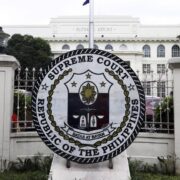
It would take eight years for that act of gross injustice and abuse of power to be made right, through the Supreme Court’s recent ruling that voided Carandang’s dismissal and restored to him his full retirement benefits and salaries.
The high court’s decision is a welcome act of correction and restitution, but also a grossly tardy one. Written by Associate Justice Maria Filomena Singh, it explicitly pushed back at Duterte’s resort to brute presidential power to kick out an independent watchdog who had the temerity to do his job of looking into the accountability of the country’s highest public official.
“By constitutional design, the President possesses no administrative or disciplinary authority over a Deputy Ombudsman. Moreover, even on the merits, the claims of Carandang’s administrative liability are tenuous at best, lacking a firm foundation in fact or law,” said the SC.
“Allowing the President to unilaterally discipline officials charged with investigating potential wrongdoing within the administration invites retaliation, coercion, and the suppression of oversight, conditions fundamentally at odds with transparency and accountability. The attempt to remove Carandang reflects precisely the abuse of power that the Second Gonzales Decision sought to prevent,” the decision added.
Illegal overreach
The Second Gonzales decision was a 2014 ruling by the high court that declared unconstitutional a section in the Ombudsman Act of 1989 that allowed for the removal from office of a deputy Ombudsman or special prosecutor by the president.
Put another way, Duterte simply had no power to fire Carandang or mess with his office in any way, and doing so was classic “abuse of power,” the SC now held. But how that illegal overreach still got implemented was thanks to Samuel Martires, appointed Ombudsman by Duterte in July 2018, who meekly deferred to presidential might by finalizing the dismissal of his very own deputy nearly a year later.
Martires’ predecessor, Conchita Carpio Morales, had refused to follow Malacañang’s dismissal order, deeming it illegal, but in Martires Duterte had found an appointee with no such inconvenient spine.
That the SC has now found it fit to strike down one of the many excesses that defined Duterte’s tenure is salutary, especially in its reiteration of a core constitutional principle given short shrift by the former president: that no one is above the law.
Not like a king
“In a nation long vulnerable to governmental overreach, the continued creation and preservation of guardrails against concentrated power remain essential to democratic life,” wrote Singh in her ponencia.
Essential reminder, except—if only the decision had been promulgated when it mattered most, when Duterte was wielding power with impunity and the SC had the courage then, through the timely issuance of this decision, to warn him firmly that his authority was circumscribed by the Constitution.
“The people would have learned that a President is not like a king who can do everything without limits,” noted eminent law dean Mel Sta. Maria in a Facebook post. But with the ruling coming out nearly a decade later, “the decision was deprived of the constitutional impact it deserved,” he said.
Nevertheless, the independence of the Office of the Ombudsman has also been reaffirmed and strengthened by this decision. Current Ombudsman Jesus Crispin Remulla should take a cue from that—by dismantling the last vestiges of the dishonorable Martires era and boldly enforcing his office’s mandate to hold all public officials to account, following the heroic example set by Carandang.
******
Get real-time news updates: inqnews.net/inqviber


Preparing for the unpredictable