




A little perspective on how far we’ve come


I was sitting in a small café in Quezon City recently, scrolling through headlines about rising living costs, economic uncertainty, housing concerns, and the many challenges facing Filipino families today.
Reading through the news, it was easy to understand why many people feel anxious about the future.
Inflation over the past few years has strained household budgets; homeownership remains difficult for many families; and global events continue to affect everything from fuel prices to the cost of basic goods.
As I looked up from my phone, however, I noticed something else. The café was filled with people working on laptops, attending virtual meetings, paying digitally, and ordering meals through their phones.
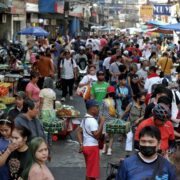
Outside, traffic moved steadily through streets lined with businesses, while delivery riders, commuters, and workers went about their daily routines. For all the challenges we face today, it struck me that much of what surrounded me would have seemed extraordinary to previous generations of Filipinos.
What we’ve learned to take for granted
Maybe one reason progress often goes unnoticed is that it doesn’t always arrive as an abrupt change that disrupts the market all at once.
Instead, it accumulates gradually, becoming part of everyday life until we stop noticing it altogether.
The ability to communicate instantly with people across the world, access vast amounts of information through a smartphone, conduct financial transactions online and pursue work opportunities beyond one’s immediate community are all conveniences that many of us now take for granted, even though they would have been unimaginable only a few decades ago.

Where progress hasn’t caught up
This does not mean that the concerns people express today are misplaced.
Housing affordability, in particular, remains a significant challenge. While technology, information, and consumer services have become more accessible, the dream of owning a home has become increasingly difficult for many households, especially in major urban centers where property values have often risen faster than incomes.
It’s understandable that younger Filipinos sometimes feel that important financial milestones are moving further out of reach.
But acknowledging these challenges shouldn’t let us overlook the progress that has also taken place. In fact, we’ve seen a lot of changes happen in the housing sector.
The continuing search for ways to improve affordability—whether through government initiatives, financing support, or more flexible payment arrangements—reflects both the reality of the challenge and the ongoing effort to address it.

Progress, after all, does not mean the absence of problems. More often, it means gradually finding better ways to respond to them.
A balanced view
For me, the lesson is not that we should be satisfied with the status quo, nor that we should ignore the very real difficulties many Filipinos face. Rather, it is that we can hold two ideas in our minds at the same time.
We can recognize that housing remains expensive, that many families continue to feel financial pressure, and that significant work remains to be done, while also appreciating that today’s Philippines offers opportunities, technologies, freedoms, and conveniences that previous generations could scarcely have imagined.
Pausing to look back
In a time when public discussion is often focused on what needs fixing, it may be worth occasionally pausing to recognize how far the country has come. Doing so does not minimize the challenges before us.
If anything, it provides a fuller perspective, one that acknowledges both the distance we still need to travel and the distance we have already covered.
The author is the Director of Research, Consultancy, and Valuation at Leechiu Property Consultants Inc.