




More than a wall


Most people see a mural as a simple work of art.
People notice the colors, the scale, and the way it transforms an ordinary wall into something worth a second look or a photo. Yet sometimes a mural tells a larger story.
Challenging assumptions
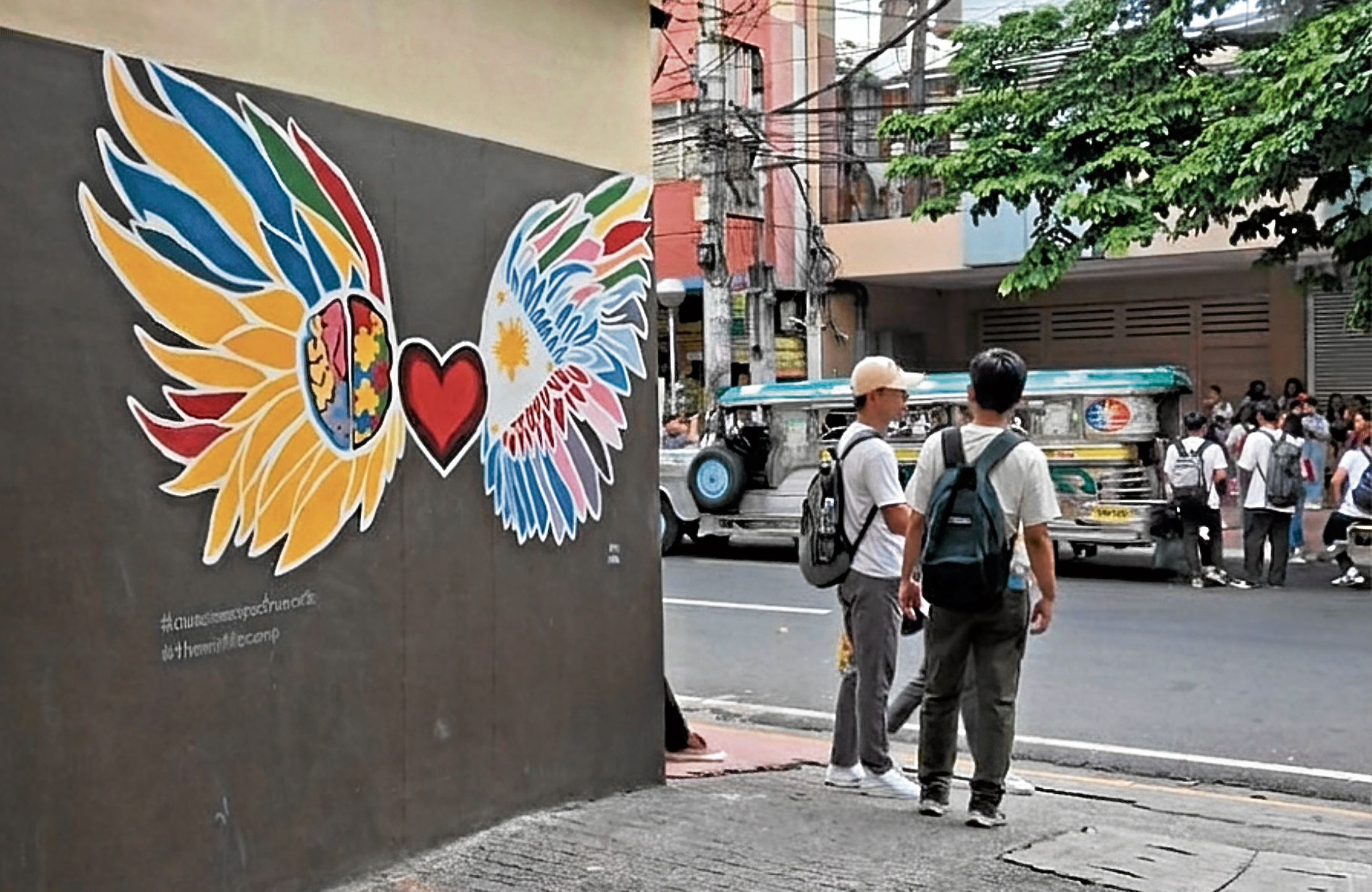
Recently, one such story appeared on a neighborhood wall in Manila.
Created in time for the Philippine Independence Day celebration, the artwork was painted by Erin Roleda Tejada, a neurodiverse artist whose creative journey continues to challenge assumptions about what individuals on the autism spectrum can achieve.
Conversations about neurodiversity often focus too much on limitations. Society frequently views neurodiverse individuals as people who need support rather than those who can contribute meaningfully to their communities. But Erin’s journey tells a different story.
Like many artists, her work did not emerge fully formed. It evolved through years of learning, experimentation, and practice. She explored drawing, watercolor, acrylic, oil, and mixed media before expanding into digital illustration with Procreate.
Along the way, her artworks found their way into local exhibitions, autism awareness programs, community initiatives, and international recognition through the Paralym Art World Cup in Tokyo. Some of her artworks are displayed in Spain, the USA, and Japan.
Willingness to learn
What stands out is not simply the recognition she has received, but her willingness to continue learning. She is also assisted by technology, such as AI, in composing artworks.
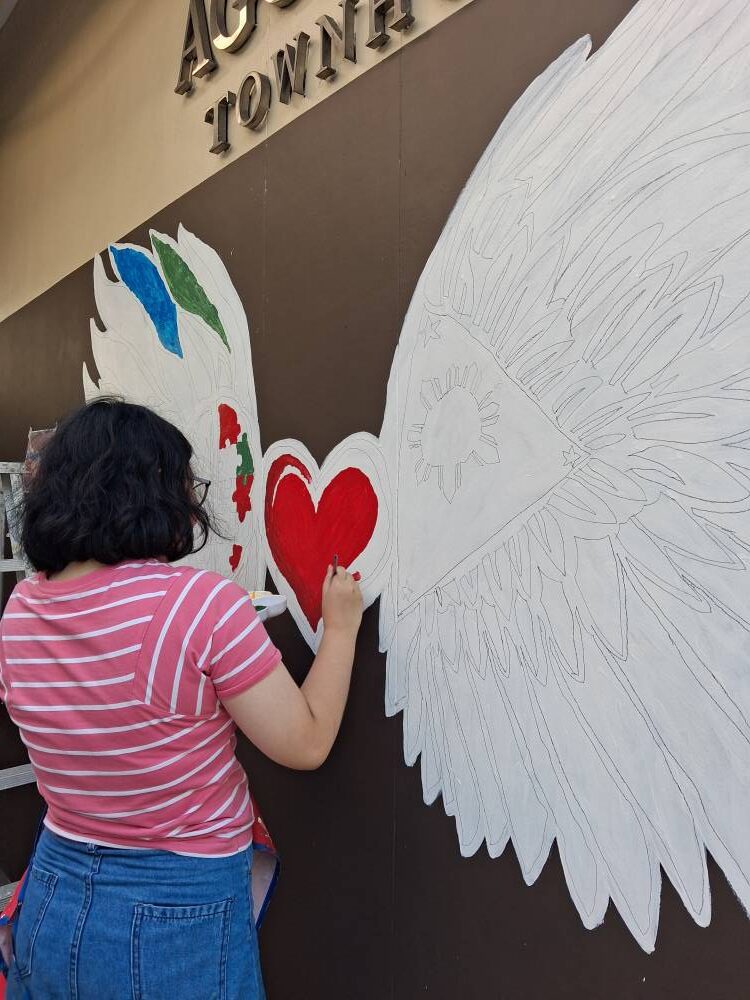
For this Independence Day mural, she completed several studies on paper before working on the final wall. Like many contemporary artists, she used digital tools to explore composition and refine ideas before translating them into paint.
The mural itself took two days to complete, turning weeks of preparation into a work that now forms part of the neighborhood’s daily experience.
The artwork faces a busy street where job applicants regularly line up outside nearby manpower agencies. It serves as inspiration and a reminder that while many Filipinos leave home in search of opportunities, there remains value in staying connected to country, community, and one another.
Thousands of people may pass by that wall in the coming months. Some will notice the colors. Others may appreciate the artwork. I hope some will see something more.
Representation matters
I hope they see proof that neurodiverse individuals are not merely recipients of support. Given opportunities, they can create, contribute, inspire, and help shape the communities around them. This is why representation matters.
Buildings also communicate messages with the spaces we create, the art we display, and the stories we choose to celebrate, which influence how communities see themselves and others.

Murals are often associated with exterior walls and public spaces, but their impact extends beyond building facades. Art can also enrich lobbies, community halls, learning spaces, offices, and residential amenities. These environments influence how people experience a building long after they have entered it.
Visibility for the artists
For developers, property owners, and designers, art can do more than beautify a space. It can provide visibility to artists whose voices are often overlooked and create places where more people feel represented.
Inclusion is often measured by the accommodations we provide. Those remain important, but inclusion reaches its fullest expression when people are not only welcomed into society but are also given opportunities to contribute to it.
The mural on that neighborhood wall may not change the world.
Yet every person who pauses to look at it will be seeing more than paint and color. They will see the work of an artist who continues to grow, learn, and create despite assumptions about what neurodiverse individuals can and cannot do.
And perhaps that is what makes the mural more than a wall. It becomes a reminder that talent exists in many forms and that communities become stronger when everyone is given the opportunity to contribute.
The author is a LEED Fellow, ASEAN Architect, UAP Fellow, and educator with over 25 years of professional practice in architecture and sustainability