






In Ilocos Sur, ancestral flavors anchor a modern table

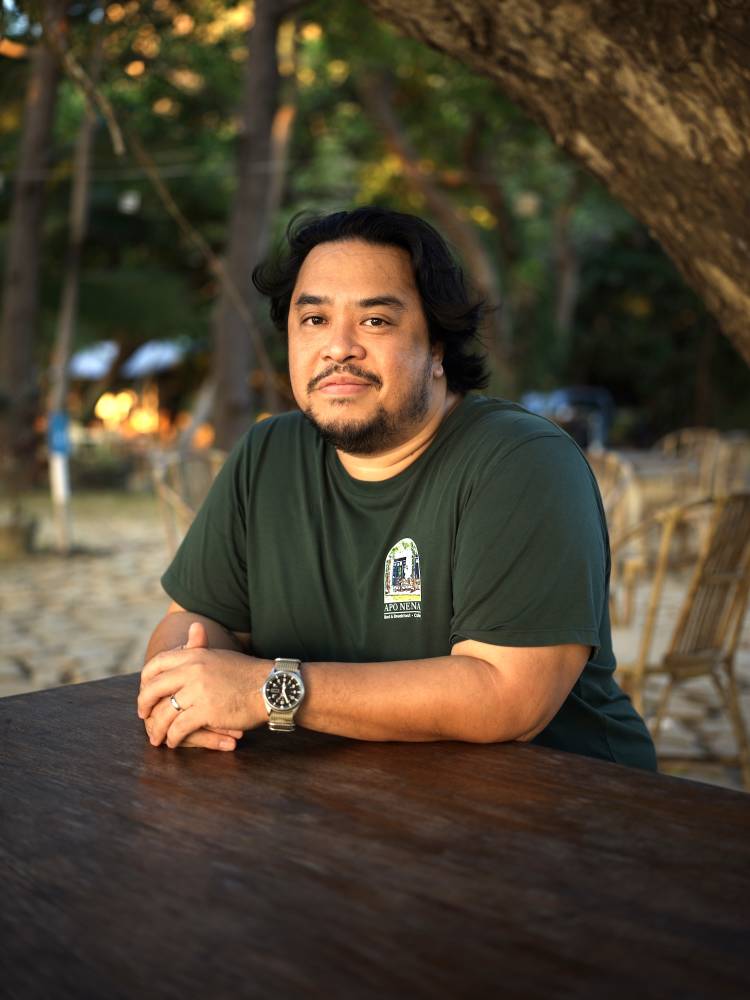
The road to Ilocos Sur was supposed to be a temporary detour for JC Dayo. A Manila entrepreneur and culinary graduate, he had his sights set on the global stage. Then, life intervened. After the passing of his grandmother and uncle, Dayo found himself standing before his maternal roots, facing the unabated decay of family property. He stayed.
Because while the rhythms of Santa Maria were familiar through the lens of cherished childhood summers, returning as an adult to steward the land required a different kind of “breaking in.”
This transition—from the nostalgia of holiday breaks to the daily reality of the province—inspired him to look at local favorites like balikutsa with fresh eyes. By weaving these ubiquitous ingredients into his culinary journey, he honors his family’s traditions while finding his own place within them.
Halting the decay
The move to Santa Maria wasn’t a calculated career shift—it was an act of honoring his Ilocano roots. Returning to the family property meant confronting a physical and emotional landscape that was beginning to slip away.
For Dayo, the decision to stay was born out of a sense of duty to his maternal roots—a commitment to halt the destruction of a place that had defined his family for generations. He wasn’t just moving into a house; he was being grafted back into a history he had previously only visited.
”The choice to settle in Sta. Maria wasn’t my idea,” Dayo explains. “In 2011, as a young culinary school graduate from Manila, I wanted to do the ‘stage in a restaurant abroad’ thing. However, after the death of an uncle, and soon after, my grandmother, I was offered an opportunity to steward the family properties here in Sta Maria, Ilocos Sur.”
He adds, “I found myself honor-bound to cherished childhood memories, and family, to do something about the unabated decay.”
As he stepped into the role of innkeeper, Dayo’s outside-looking-in point of view became his most valuable tool for preservation and reimagination. He looked at the weathered structures within his ancestral property and saw them as raw materials that could be used to build a sanctuary. He realized that to save the property, he had to embrace the slow and unbothered pace of the province.
And in doing so, he created a space where the stillness of Ilocos Sur could be experienced by others seeking a recovery of their own.
The sugarcane connection
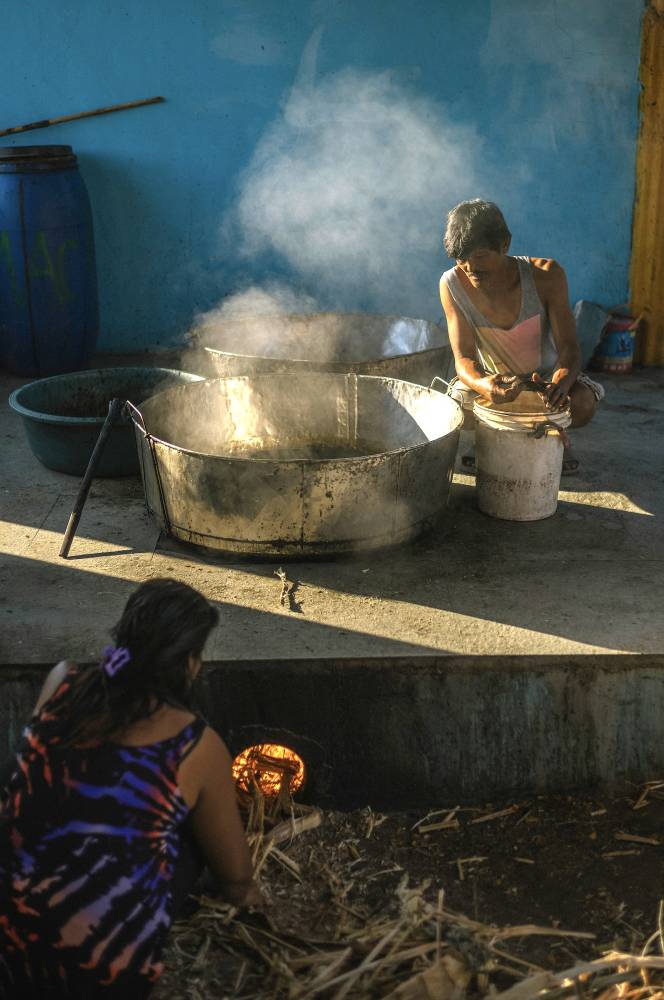
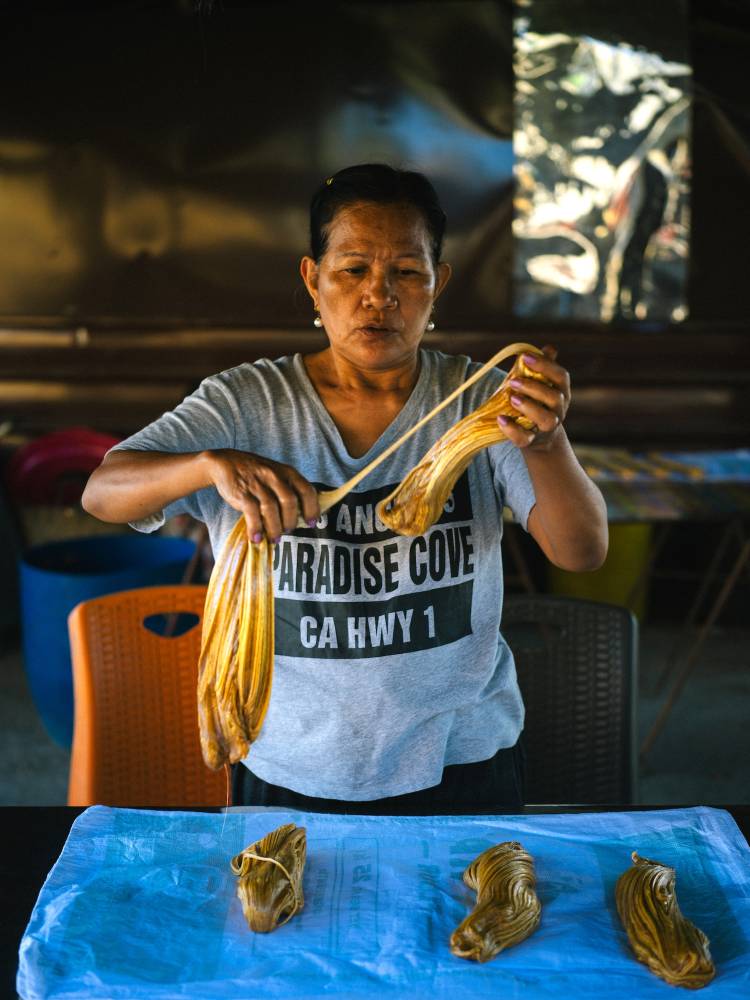
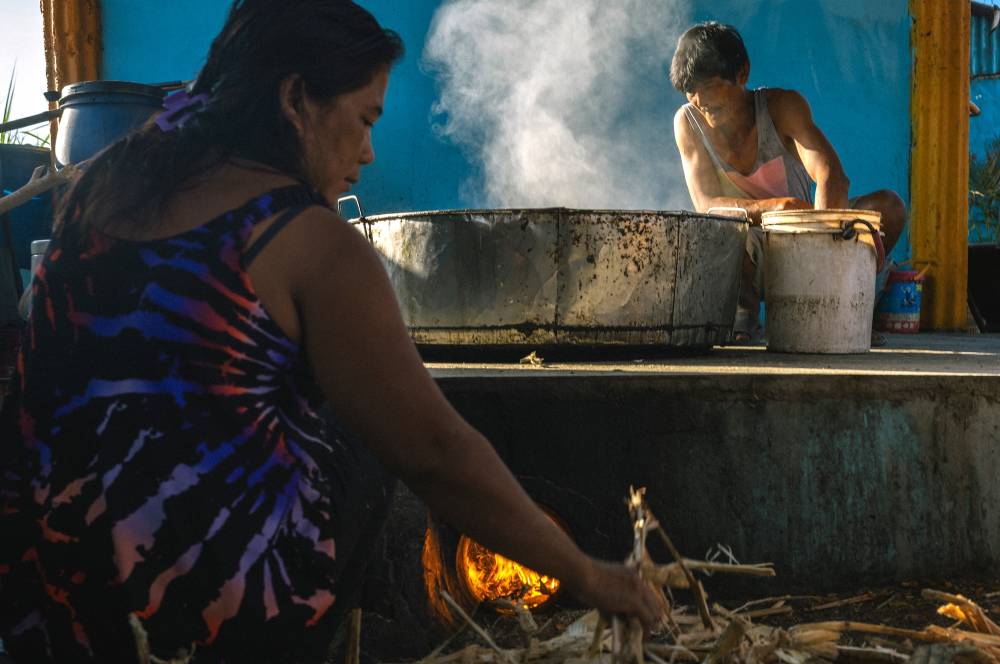
The daily life of Santa Maria is shaped by its unique material culture, specifically the sugarcane that serves as the lifeblood for several local industries. Because they share the same source, the production of sukang Iloko (vinegar) and balikutsa (pulled sugar) often happens in parallel, creating a localized economy of scale that is as much about shared resources as it is about tradition.
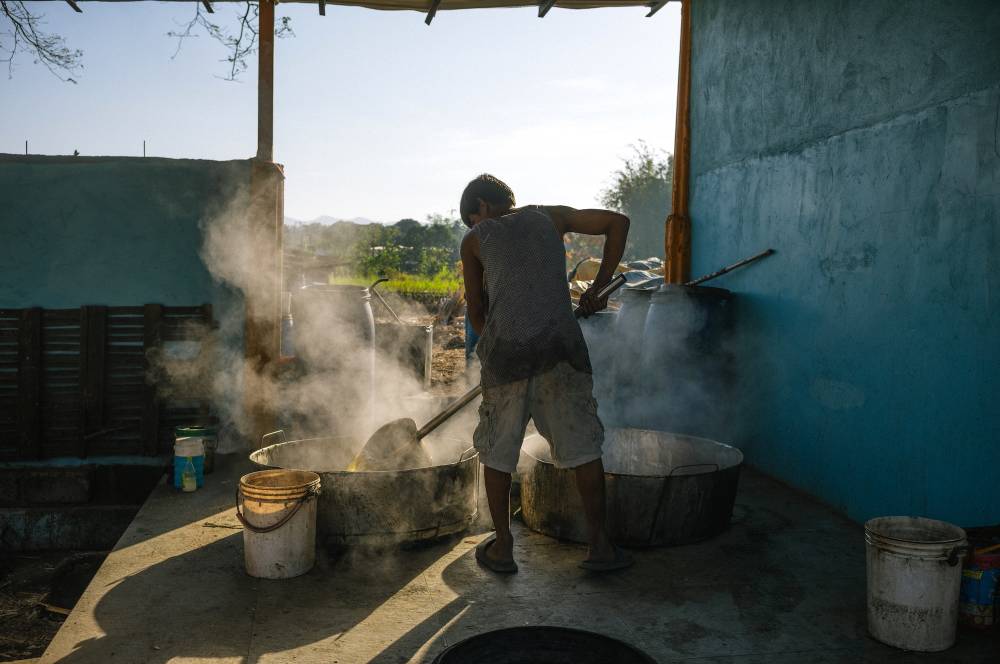
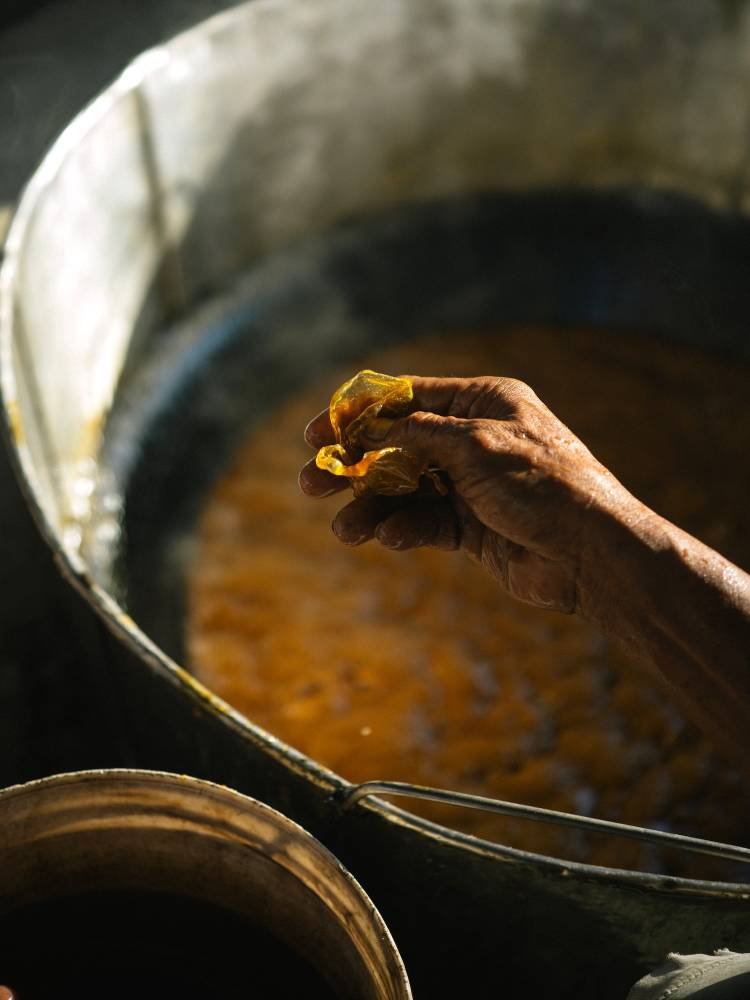
In the shaded workspaces of producers like Boy Villalobos, the sugarcane juice is set aside for the slow, patient fermentation required for vinegar. Nearby, the process takes a more rigorous turn. In the heat of the afternoon, Edna, Joseph Tamayo, and their neighbors work in sync, cooling thick, caramelized sugarcane juice.
This labor is pervasive in the region—a standard part of the landscape—but it represents the specific, regional palate that Dayo sought to bring back to the table at Apo Nena.
The clay and the cure
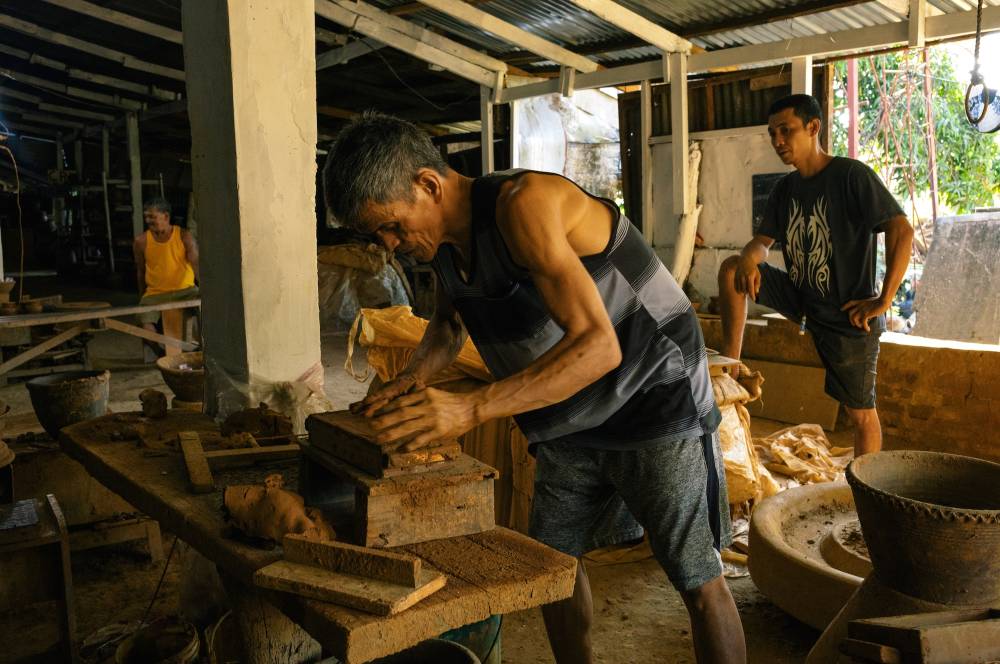
These caramelized sugars require a specific vessel to cool: the burnay. Hand-molded by potters in Vigan, these heavy, unglazed clay jars are the essential hardware of the Ilocano kitchen.
And while modern production has seen a shift toward more utilitarian plastic vats for the fermentation of vinegar, the burnay remains the traditional anchor for the balikutsa. Its thick walls provide the necessary surface for the molten sugar to begin its transformation. Without the grit of Vigan’s clay and the heat of its ancient kilns, the primary flavors of Santa Maria would traditionally have nowhere to develop.
It is this lifecycle—from the sugarcane fields to the Vigan kilns—that eventually terminates at Apo Nena. By the time Dayo incorporates these elements into his menu, they have already passed through the hands of a dozen local artisans.
Inspired by his lola
At Apo Nena, Dayo has curated a space that reflects a conscious departure from the overstimulated pace of modern urban life. In an era defined by digital noise, doomscrolling, and the restless pace of the city, the sanctuary he stewards offers a more streamlined and mindful way of living—a reaction to the complexities of his previous life in Manila.
“Apo Nena was named in honor of my grandmother, Nena F. (Florendo) Reyes. Apo is an honorific used by the Ilokanos to show deep love and respect for elders,” Dayo explains. “And I used it in the name to reflect exactly that same sentiment. She was a school teacher in the neighboring Suso Elementary school, and above all else, she loved this place, and instilled in us, her apos, a love for the place as well.”
“Being the youngest in my generation, I no longer got to experience this, but my cousins said summers also meant summer lessons with our lola Nena, and she was a fierce, meter stick-wielding, disciplinarian—being married to my grandfather, a military man, former Brig. Gen. Benjamin Reyes,” he adds.
Dayo even recalls “fond memories of stealing bottles of soft drinks from her fridge for myself and older cousins, as Lola would allow me the deed, but [would] come down hard on my older cousins if caught.”
The heirloom table
For the chef, it is less about “simplifying” the province and more about recovering a sense of presence. “What sets us apart from other accommodations is that we try to give guests an approximate experience of staying in my lola’s house,” he explains.
“It’s similar to the experience I had spending summers, breaks, and holidays here—raw, slow, unabashedly provincial.”
This shift in pace eventually reached the kitchen. For Dayo, the move to Santa Maria became the catalyst for reconciling his formal culinary background with the deep-rooted traditions of the North. He chose to lead with Santa Maria’s local flavors—the balikutsa, the sukang Iloko, and the herbaceous notes of karimbuaya—as a way of honoring his roots while inviting his guests to experience them in a different light.

At the communal table, these ingredients are reimagined, serving as a gateway for diners to engage with the flavors of Ilocos Sur in a way that is both familiar and entirely new.
”If I were to put my food philosophy on the spectrum of hyperlocal on one end versus heirloom on the other, I would lean more toward heirloom,” the chef says. “My desire is to bring in guests into the food history of our family… The locality naturally emerges, because if we’re to truly honor family recipes, they would also have to be anchored in where we are from.”
Crafting an Ilokano plate
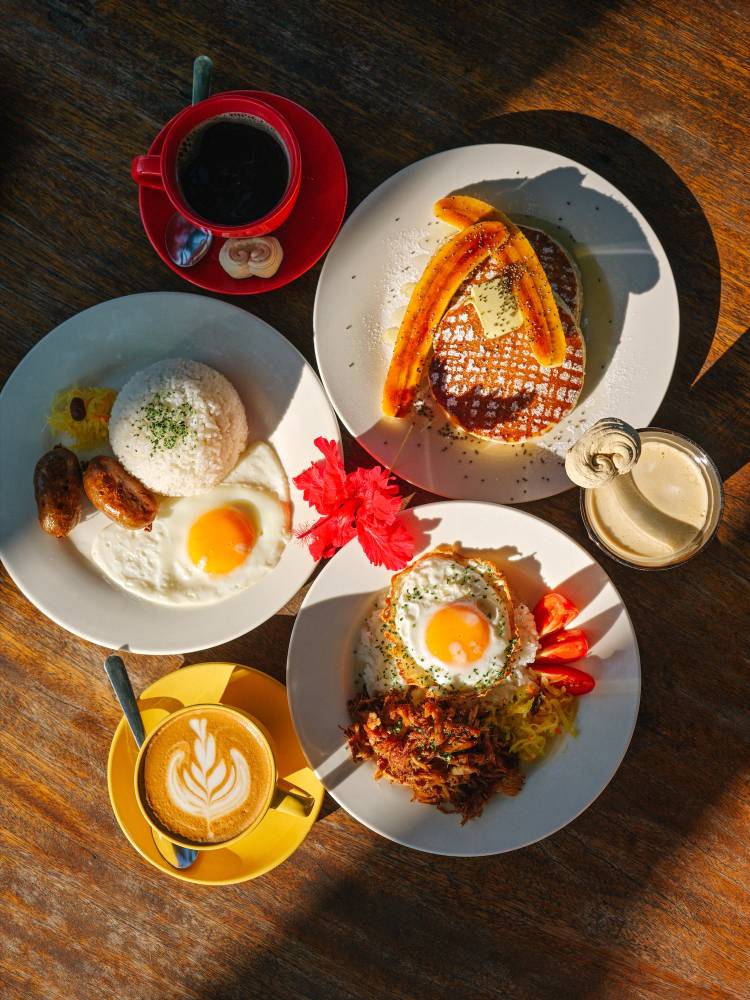
For Dayo, the challenge to infuse what he considers comfort food with the distinct flavors of the Ilocos region is a beautiful one. ”My use of balikutia focuses on the cafe beverages. We turn it into a syrup for our Ilokano latté, which is a reimagining of a Spanish latté that uses condensed milk,” he explains.
“It gives our Ilokano latté a subtle smoky caramel sweetness. It is also placed on the saucer to be used as a sweetener to long blacks or French press coffee, or eaten as is like a mignardise,” he shares. “We’re also experimenting using it in our creme brulee, both in the custard, and mixed with regular sugar as part of the brûléed top.”
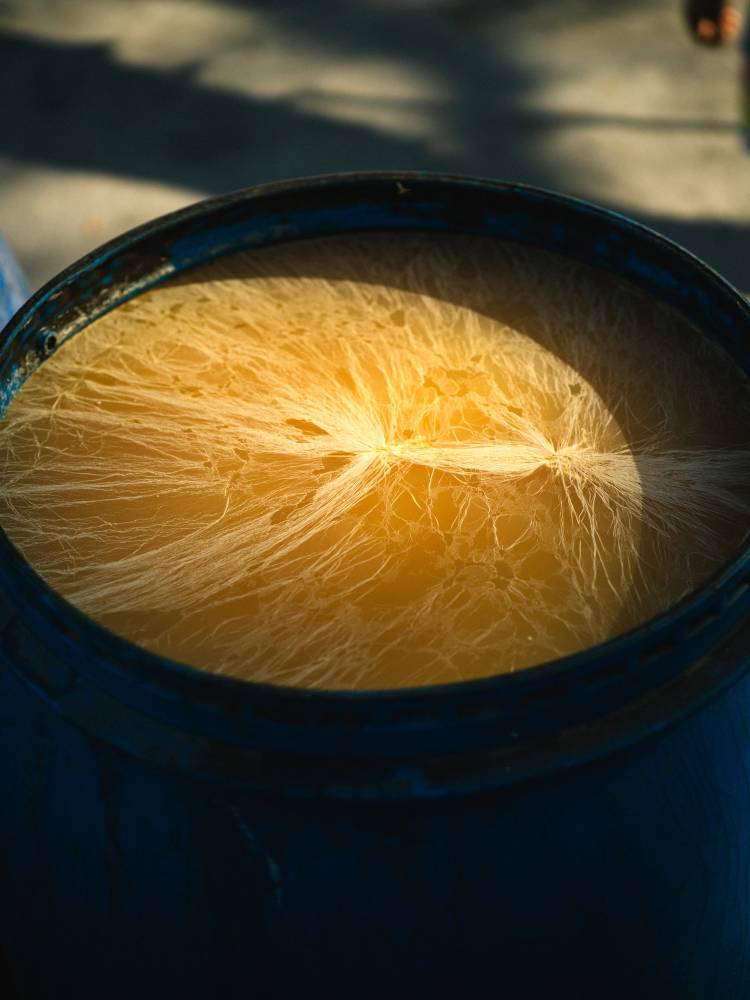
Made in parallel to balikutsa is the sukang Iloko. Dayo explains how both are made with locally grown sugar cane, and that “their production is intrinsically linked.”
How? “Young sukang Iloko is used in washing the pots, [which are, in turn,] used to create caramel that turns into balikutsa,” the chef says. “This liquid is then added to the vats of aging sukang Iloko to boost fermentation and give the vinegar a rounder flavor.
“Sukang Iloko is used to create the cafe’s adobo flakes, pork seared and long simmered in soy sauce and sukang Iloko until falling apart tender and shreddable. Upon second cooking in oil to make crispy, the saved braising liquid of the adobo is added back into the pan, fortifying the flavor,” he adds.
Bringing heritage flavors to the table
Beyond the use of sugarcane-based ingredients such as balikutsa and sukang Iloko, Dayo brings to the foreground Ilocos’ ubiquitous cactus-like succulent, karimbuaya, as a key aromatic of the northern lechon. “Karimbuaya is our community’s answer to other regions’ lechons that heavily use tanglad, or lemongrass. Unlike tanglad, the use of karimbuaya gives roasted meats a subtle citrus aroma, and can be eaten with the meat to give a tangy herbaceous contrast to the rich fatty meat,” the chef shares.
“In our private dining menu, karimbuaya is featured in two of our dishes. First, in our version of roast chicken, we cut the karimbuaya into fine julienne and then macerate it with salt and pepper, along with finely chopped garlic and soy sauce. It is then stuffed into the cavity of the chicken before it is roasted,” he adds. “This karimbuaya stuffing is served along with the carved chicken, and the drippings are made into a flavorful karimbuaya-infused gravy.”
At Apo Nena, the generational endurance of the Ilocano artisan meets the restless curiosity of one who has finally come home. It is a shared capacity for reimagination—where the practiced hands that have worked the sugarcane fields and the Vigan kilns for centuries provide the marrow for new dreams.
By giving these ancestral flavors a contemporary voice, Dayo ensures that the story of his family and the culture of his home are not just preserved as artifacts, but are allowed to breathe, evolve, and remain vital at the center of the table and beyond.