



P2/L fuel hike follows 3 weeks of price drop


After three weeks of rollback from surging fuel prices, motorists are back to facing a new hike, with diesel and gasoline raised by about P2 per liter starting Tuesday.
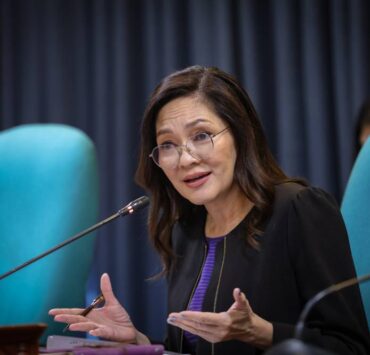
In a media briefing on Monday, Energy Secretary Sharon Garin said local fuel retailers will implement an increase of up to P2.66 and P2.21 per liter of diesel and gasoline, respectively.
But the Department of Energy (DOE), following the declaration of a national state of energy emergency on March 24, can now impose limits on price increases of petroleum products as well as dictate the minimum rollbacks.
This means those loading up in Metro Manila and highly urbanized areas will see diesel prices in the range of P79.62 to P107.48 per liter.
But the prices are far from the high of as much as P170 per liter soon after the Iran war broke out on Feb. 28.
Price surge, easing
Gasoline, meanwhile, would be in the price range of P73.21 to P107.11 per liter for the week of May 5 to May 11.This marks the second straight week of price hikes for gasoline and diesel’s first price increase in three weeks.
Local pump prices began to surge by double digits some two weeks after the war broke out.
But since the pronouncement of a ceasefire between the United States and Iran, the motoring public saw easing prices beginning April 14—with price cuts soon reaching more than P24 per liter for diesel alone.
Yet the period of cooling prices may soon come to an end, going by this week’s price adjustments and analysts’ forecasts until next year.
‘Heightening concerns’
An industry source who requested anonymity said that this week’s upward price movements mirrored “heightening concerns” over continued supply disruption, amid the continuing blockade of the Strait of Hormuz, a crucial maritime route for fuel trade.
Energy officials said the country has enough fuel supply, sufficient for 53.71 days as of May 1, even with the current geopolitical situation.
“So, [this] basically shows now we have 53 days on average to find replenishment for what we consume,” Garin said.

The DOE chief said the government had been in talks with many countries, but also cited the need to time the delivery of fresh supplies amid the lack of storage facilities.
“Then, in the future, there could be government-to-government deals to accommodate whatever diesel, gasoline, or other petroleum products are needed, just to serve as our buffer,” Garin said.
“This is not to compete with oil companies, but to ensure that the country has enough reserves. Even if our oil companies don’t run short, at least the government will have its own reserves,” she added.
Support for VAT removal
Meanwhile, Garin expressed her support for proposals to remove the value-added tax (VAT) on systems loss charges, which represent losses in the distribution and delivery of electricity.
“We have been consistent in our opinion on VAT removals and anything—because anything that would lower the price of electricity the DOE supports,” she said.
“On the other hand, however, the decision on whether to suspend, remove, or impose any tax measure is under the mandate of the Department of Finance. So, this is for the Department of Finance to assess and review,” Garin said.