







Hontiveros: Cut systems loss VAT in power bills

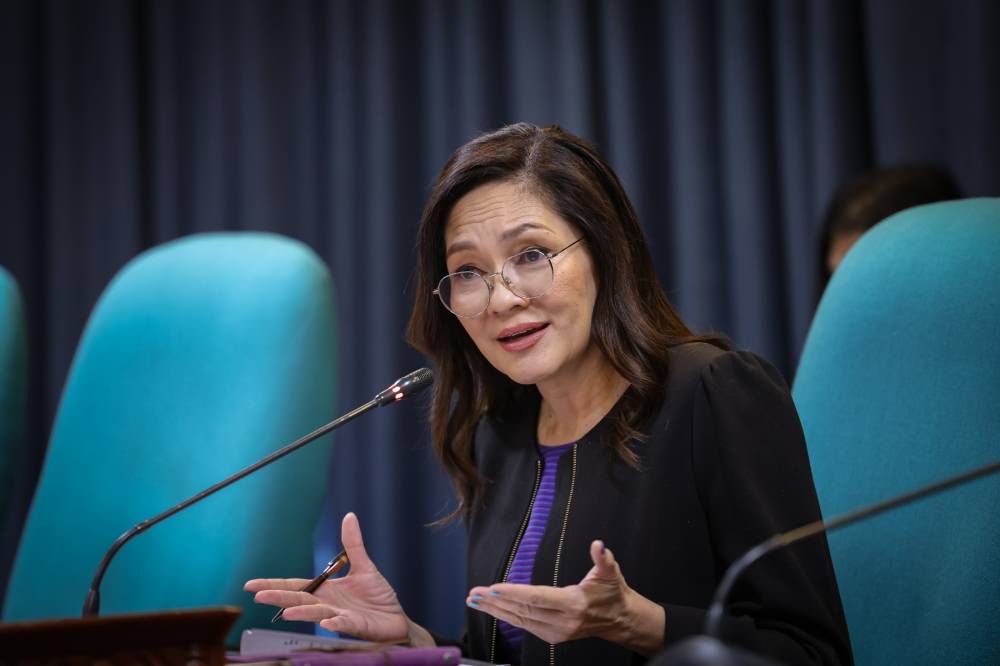
Sen. Risa Hontiveros on Monday filed a bill that seeks to remove the value-added tax (VAT) on systems loss charges currently being passed on to the monthly electricity bills of consumers.
The proposed measure, Senate Bill No. 2076, aims to amend the National Internal Revenue Code to exclude systems loss charges from transactions subject to VAT, according to Hontiveros.
By removing the 12-percent VAT on systems loss charges, she said tax policies were not only made more fair and just, “but we also seek to provide immediate and tangible relief to residential electricity consumers by reducing overall electricity bills.”
“Residential households, in particular, have limited capacity to absorb these additional expenses. Consumers should not be unduly taxed on inefficiencies within the power system that are beyond their control,” she added in her proposed bill.
Double burden
She noted that “systems loss” under the bill refers to “the difference between the electrical energy delivered to the distribution system (energy input) and the energy delivered to the residential household consumers (energy output).”
“VAT is a consumption tax on goods and services. Systems loss charges, which represent losses in the distribution and delivery of electricity, are neither goods nor services purchased by power consumers,” she pointed out.
For Hontiveros, consumers should no longer be made to carry the “double burden” of paying for VAT on top of the systems loss charges passed on by electric utilities.
“This VAT on systems loss is a double agony and insult: We are already paying for systems loss that we did not benefit from, and then we are paying tax on it. We must immediately end this unfair arrangement, especially now that electricity costs are going up,” she added.
Hontiveros said the bill is only the first of her planned package of legislative measures aimed at providing assistance to power consumers, especially low-income households, amid the rising costs of basic necessities due to the Middle East conflict.
Electricity lost
According to power distributor Manila Electric Co. (Meralco), systems loss charges, which make up 5 percent of electricity bills, are “part of the generation and transmission costs paid to generation companies and NGCP (National Grid Corporation of the Philippines).

“This accounts for electricity lost due to technical and nontechnical factors. The ERC has set a system loss cap, and any losses beyond this limit cannot be passed on to customers,” it said.
Systems loss charges may stem from technical loss, when energy is dissipated as heat as power travels through wires and transformers; or nontechnical loss, when power is lost through theft, illegal tapping, and meter tampering.
Meralco’s overall systems losses, per a September 2024 Philippine Information Agency report, had been reduced to below 6 percent. Specifically, electrical nontechnical losses stemming from electricity theft were down to less than 1 percent, stemming from the company’s intensified efforts against illegal connections, including jumper wires and direct tapping, in collaboration with local government units, barangay officials, and the police.
These activities, Meralco vice president and head of corporate communications Joe Zaldarriaga said then, violate Republic Act (RA) No. 7832, also known as the Anti-Electricity and Electric Transmission Lines/Materials Pilferage Act of 1994, with violators facing fines and/or imprisonment of six to 12 years.
Under RA 7832, part of the systems losses, including those from stolen electricity, is passed on to consumers, with VAT added to the charge.


