










US-Iran ceasefire showing early cracks

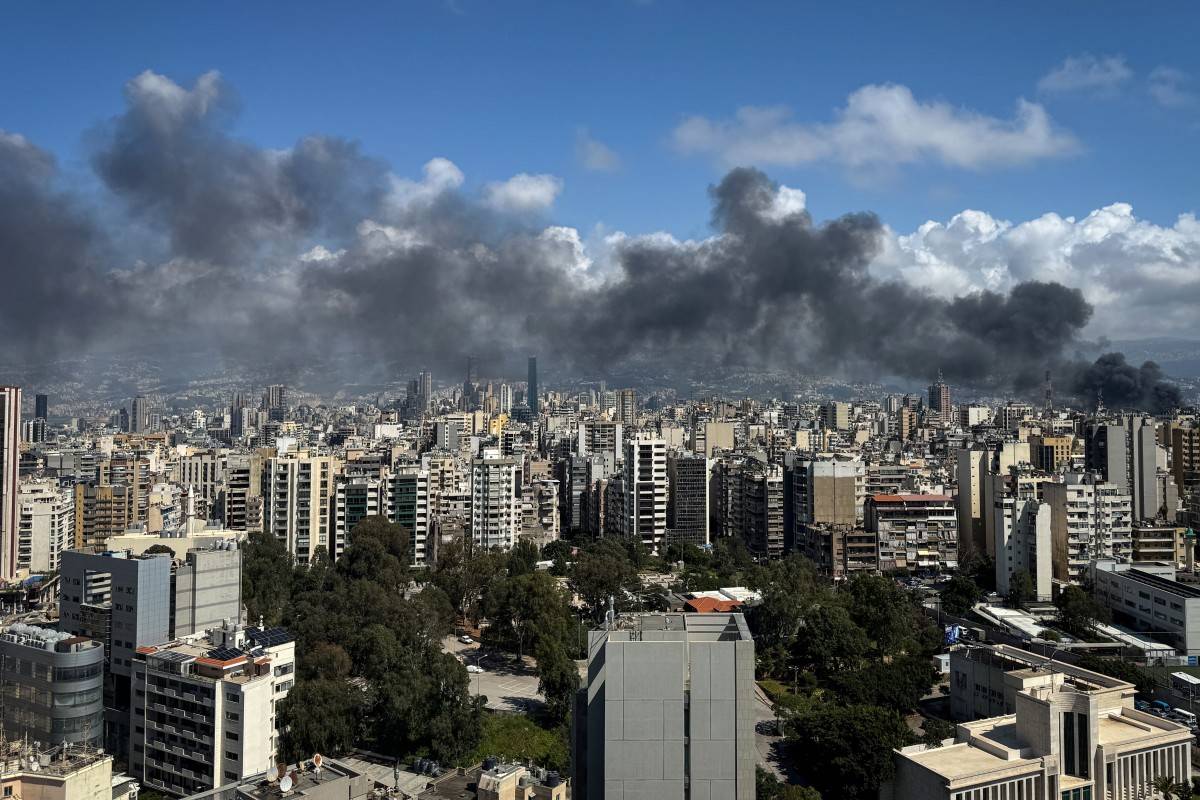
Lebanon declared a national day of mourning on Thursday after Israeli strikes pummeled the country, shaking a fragile truce less than 48 hours after it came into force.
Washington and Tehran both claimed victory after agreeing to a two-week ceasefire and negotiations aimed at ending a war that has killed thousands across the Middle East and sparked global economic upheaval.
But the deal’s fractures emerged quickly on Wednesday as Israel carried out its heaviest strikes on neighboring Lebanon—including in densely packed central Beirut—since the Iran-backed militant group Hezbollah joined the war in early March.
At least 182 people were killed and nearly 900 wounded on Wednesday, the Lebanese health ministry said.
Lebanese Prime Minister Nawaf Salam’s office said Thursday will be “a national day of mourning for the martyrs and wounded of the Israeli attacks that targeted hundreds of innocent, defenseless civilians,” ordering the closure of public administrations and the lowering of flags.
Further talks ‘unreasonable’
Israel has said its battle against the Lebanese group was not part of the ceasefire, an argument echoed by US Vice President JD Vance, days before he is due to lead talks with Tehran in Pakistan.
“If Iran wants to let this negotiation fall apart… over Lebanon, which has nothing to do with them, and which the United States never once said was part of the ceasefire, that’s ultimately their choice,” he said.
But Iran’s parliament speaker Mohammad Bagher Ghalibaf appeared to threaten the ceasefire, posting on X that the “workable basis on which to negotiate” had already been violated, making further talks “unreasonable.”
Ghalibaf listed three alleged US violations of the truce plan: the continued attacks in Lebanon, a drone entering Iranian airspace, and a denial of the country’s right to enrichment.
Adding to the fragility of the truce—agreed hours before a deadline set by US President Donald Trump—a senior US official said Iran’s 10-point plan was not the same set of conditions the White House had agreed to in order to pause the war.
Moment of ‘real hope’
More than 1,700 people have been killed in Lebanon since Israel launched airstrikes and a ground invasion last month, local officials said.
Iran’s Revolutionary Guards warned they would “fulfill our duty and deliver a response” if Israel did not cease its strikes, while Hezbollah said it had a “right” to respond.
Israeli Prime Minister Benjamin Netanyahu said the country remained prepared to confront Iran if necessary, as it still had “objectives to complete.”
Pentagon chief Pete Hegseth also vowed that American forces remained at the ready if the conflict flared up again.

The belligerent rhetoric came ahead of high-stakes talks in Pakistan expected on Friday or Saturday. Pakistani Prime Minister Shehbaz Sharif, whose country mediated the ceasefire, urged on X for all parties to “exercise restraint and respect the ceasefire for two weeks” to allow diplomacy to take hold.
Further casting doubt on the truce’s durability, Iranian state media announced fresh missile and drone attacks against US-allied Gulf states in retaliation for airstrikes on its oil facilities, with Kuwait, the United Arab Emirates, Saudi Arabia, and Bahrain all reporting strikes since the ceasefire took effect.
On Wednesday, the leaders of several European nations, Canada and the United Kingdom said “a swift and lasting end to the war” must be negotiated, as Pope Leo hailed a moment of “real hope.”
But Tehran’s demands over uranium enrichment, economic sanctions, and future control of the Strait of Hormuz remain deeply at odds with those of the United States.
******
Get real-time news updates: inqnews.net/inqviber