











PH BOP deficit widened to 10-month high in February

The Philippines recorded its widest cash shortfall in 10 months in February, as rising import costs and foreign capital outflows, fueled by global uncertainty, weighed on the country’s external position.
Latest data from the Bangko Sentral ng Pilipinas (BSP) showed the country’s balance of payments (BOP)—a gauge of whether more foreign currency is entering or leaving the economy—registered a deficit of $2.3 billion, the fourth straight month in the red.
The February gap was the largest since the $2.6 billion shortfall in April 2025, bringing the two-month total deficit to $2.7 billion, already exceeding the BSP’s full-year projection of a $1.2 billion gap for 2026.
Analysts said the widening shortfall partly reflected a persistent trade imbalance as well as shifts in foreign funds in local financial markets.
Those outflows were partly offset by steady remittances from overseas Filipinos, along with earnings from business process outsourcing firms and the tourism sector.
John Paolo Rivera, senior research fellow at the Philippine Institute for Development Studies, said the BOP deficit in February likely reflected a mix of higher import costs, especially oil and portfolio outflows amid global uncertainty.
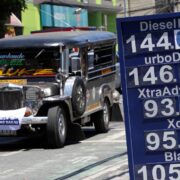
“As a net oil importer, the Philippines is particularly exposed to the recent surge in oil prices, which widens the trade deficit,” Rivera said.
Cautious investors
Cid Terosa, an associate professor and former dean of the School of Economics at the University of Asia and the Pacific, said capital outflows appeared to have outpaced inflows in February as some investors turned cautious following geopolitical developments.
Before the current war in the Middle East broke out, US President Donald Trump in January had said that a US “armada” was heading toward Iran.
“The outflows can be traced to the heightened anticipation of a geopolitical crisis in the Middle East, as many observed aggressive naval movements towards Iran,” Terosa said. “Capital was most likely moved away from developing economies to safer havens.”
Despite the shortfall, the country maintained healthy buffers against external shocks. The gross international reserves reached $113.3 billion as of February, which can help the country finance its imports and foreign debt obligations during difficult economic times, as well as stabilize its currency.
The buffer funds—made up of foreign-denominated securities, foreign exchange and other assets including gold—could cover 7.5 months’ worth of imports of goods and payments of services and primary income, way above global adequacy standards.
Looking ahead, Terosa warned that a prolonged conflict in the Middle East could further weigh on the Philippines’ external position.
“If the current geopolitical crisis will be prolonged and intensified, the BOP will most likely register a higher deficit, exerting pressure on the peso to weaken further,” he said.
Rivera echoed the same view. “The BOP may remain under pressure in the near term if oil prices stay elevated and global financial volatility persists. Steady inflows from remittances, IT-BPM and tourism should provide some buffer,” he said.


Leveraging the power of foresight