







S&P downgrades PH outlook to ‘stable’

The Marcos administration’s bid to secure the Philippines’ first-ever “A” credit rating has weakened after S&P Global Ratings downgraded its sovereign outlook to “stable,” citing the energy shock from the Middle East war.
A stable outlook means the Philippines’ “BBB+” investment-grade rating is unlikely to change over the next one to two years.
In a report on Thursday, the credit rater affirmed the country’s rating—just one notch below the coveted “A” level—but downgraded its outlook from “positive,” dampening prospects for an upgrade.
S&P said the surge in oil prices, compounded by the spillover from the flood control corruption scandal, was expected to widen the Philippines’ current account deficit to 4 percent of gross domestic product this year from 3.3 percent in 2025.
“We revised the rating outlook on the Philippines to stable from positive because the war in the Middle East has increased risks for the trajectory of the country’s external and fiscal metrics,” S&P said, adding that while the conflict may ease in April, disruptions could persist in the coming months.
“However, uncertainty over how the situation will unfold is high. We believe it is unlikely that external and fiscal support will improve sufficiently over the next two to three years to meaningfully augment support for the sovereign ratings,” it added.
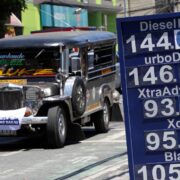
The Philippines is especially vulnerable to the energy shock as it imports 98 percent of its oil from the war-torn region. In response, the government has been rolling out measures to cushion the impact, which analysts warned could tighten fiscal space.
As it is, the Department of Budget and Management has earmarked about P238 billion for the crisis, sourced from automatic and continuing appropriations in the 2026 national budget. It has also ordered a 20-percent cut in nonessential government spending to create additional fiscal room.
The Bangko Sentral ng Pilipinas welcomed the affirmation of the country’s sovereign rating.
BSP Governor Eli M. Remolona, Jr. said “The BSP will continue to monitor local and overseas data to effect policies aimed at safeguarding price and financial stability amid a challenging economic and geopolitical landscape.”
S&P said the government may need to absorb a higher deficit as it ramps up support measures, including targeted subsidies and potential fuel tax adjustments.
Despite near-term pressures, S&P maintained that the country’s long-term growth outlook remains intact. It offered a more upbeat economic growth projection of 5.8 percent in 2026 from the mere 4.4 percent in 2025.

“The stable outlook reflects our expectation that the Philippines will maintain healthy economic growth and that its fiscal deficit will gradually decline over the next two years,” it said.
“We believe the impact of the ongoing energy shocks due to the Middle East war and governance-related issues will wane by the second half of the year. Reforms in policies affecting business, investment and tax will benefit growth over the next three to four years.”
Over the medium term, the credit rater expects the Philippines’ fiscal position to gradually improve as economic conditions stabilize, although a return to prepandemic levels may take longer than previously expected.
The door remains open for a potential credit rating upgrade if the economic recovery helps lower the government deficit, stabilize debt and accelerate fiscal consolidation beyond current expectations.
******
Get real-time news updates: inqnews.net/inqviber