








Baguio, Benguet town eye land swap deal

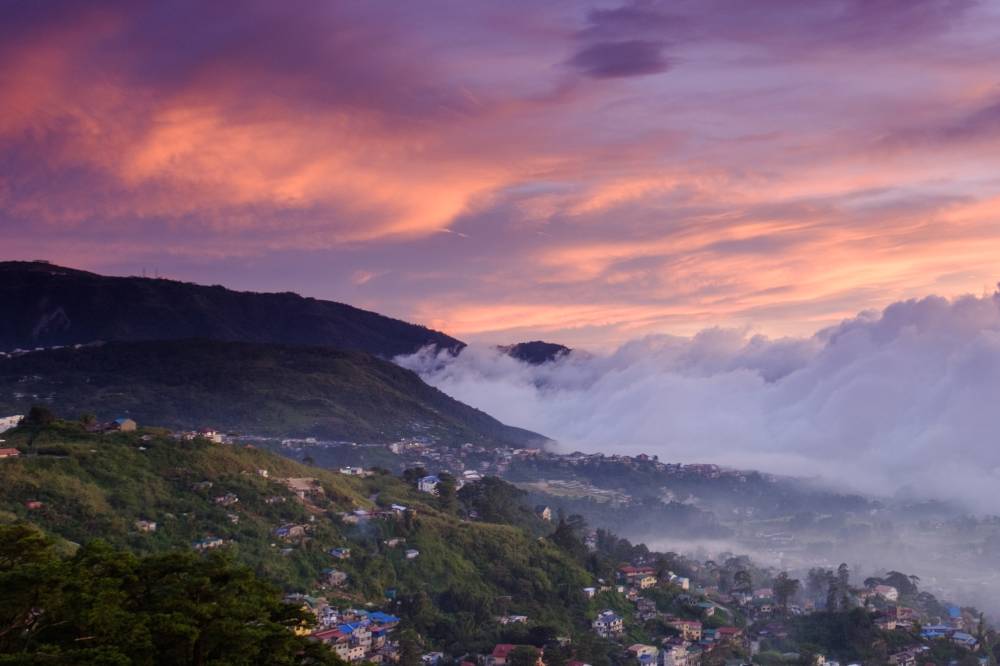
BAGUIO CITY—Residents of four Baguio villages and a barangay in the neighboring Benguet town of Tuba will decide whether to approve or reject a proposed government land swap aimed at resolving a boundary dispute that dates back to the creation of the summer capital, the Inquirer learned this week.
The Baguio government led by Mayor Benjamin Magalong and the Tuba municipal council headed by Vice Mayor Maria Carantes agreed in principle to exchange government properties during a joint session at the City Hall on Wednesday to correct border issues.
In an interview on Friday, former city administrator and Councilor Peter Fianza said these issues include the location of Tuba’s town hall, which is technically situated on Baguio property.
The agreement marks the second attempt by both local governments to finalize a land swap, following an earlier arrangement incorporated in the 2012 congressional amendments to the 1909 Baguio City Charter. That proposal was later vetoed by the late President Benigno Aquino III over a separate issue involving Baguio townsite sales revenues.
Survey
Both governments also agreed to conduct a referendum for affected households, Magalong said in a video post from the Baguio Public Information Office, although he did not provide further details on the proposed exchange.
In April last year, the Baguio City Council discussed a draft proposal in which the city would cede 142,249 square meters of territory to Tuba in exchange for an 186,808-square-meter parcel hosting an annex of the Baguio City National High School.
Fianza, an Ibaloi lawyer who chairs the committee on urban planning, lands and housing, said the city will first conduct a survey to accurately measure and possibly adjust the areas involved in the exchange. Magalong earlier said this process could take about two months.
He added that Tuba is also expected to submit the agreement to the Benguet Provincial Board for review and confirmation before both local governments pass corresponding resolutions or ordinances to formalize the deal.
Historical records show that boundary anomalies between Baguio and Tuba were first raised in 1927.
Baguio, designed by American architect Daniel Burnham as a hill station for the colonial government, was established during the American era as a summer capital to escape Manila’s heat. Its construction involved areas that were originally part of older Ibaloi communities, including Tuba.
The 1909 city charter defines Baguio’s territorial boundaries in detailed metes and bounds, which have since been the subject of overlapping claims between the two local governments.
Tuba discovered in the early 20th century that parts of its territory, including the municipal hall site, fall within Baguio’s chartered boundaries. Several of Baguio’s hydroelectric plants are also located in Tuba, although these are recognized as city properties.
The boundary dispute has also affected local taxation, with some households along disputed areas reportedly paying taxes to Tuba under the belief that they fall under its jurisdiction.
Magalong said the land swap proposal was first raised in 2010 and revived again in 2020, but valuation issues have remained the primary challenge for both technical working groups.
If ratified, the agreement will be incorporated into a second draft bill that Baguio Rep. Mauricio Domogan is preparing to correct Republic Act No. 11689, the revised Baguio City Charter. The law lapsed into effect during the final days of former President Rodrigo Duterte’s administration despite serious errors flagged by Baguio officials.