







DBM releases fuel subsidy; diesel seen hitting P130/L

As fuel prices continue to rise, the Department of Budget and Management (DBM) said on Friday that it had fast-tracked the release of P2.49 billion to the fuel subsidy program of the Department of Transportation (DOTr).
Another P18.65 billion was released to the Department of Public Works and Highways (DPWH) to ensure continued employment of workers in the infrastructure sector and to support projects across the country.
An additional P324.36 million was also disbursed to the DPWH to settle prior obligations for foreign-assisted infrastructure projects, ensuring their timely completion.
“Every peso we release is meant to ease a burden, sustain a livelihood, or keep a service running for our people—especially at a time when global events beyond our control are affecting daily life here at home,” Budget Secretary Rolando Toledo said in a press release.
“At a time when global headwinds are pushing fuel prices up, it is critical that we step in where it matters most—supporting our drivers, protecting commuters, and ensuring that no Filipino is left to carry these challenges alone,” he added.
Allotments not new
The DBM noted that the releases are not new or unplanned expenditures but are based on existing appropriations and previously approved allotments.
“For the fuel subsidy, this comes from existing unobligated allotments under last year’s budget. It is important to note that the fuel subsidy program is trigger-based—it can only be implemented once specific conditions are met, particularly when the average price of crude oil in the world market exceeds $80 per barrel,” it said.
The releases for the DPWH correspond to existing appropriations, including payments for completed and delivered goods and services, and cash requirements for ongoing projects, the DBM said.
On Tuesday, the government began distributing a one-time cash assistance of P5,000 to 139,000 tricycle drivers in Metro Manila under the Assistance to Individuals in Crisis Situation (AICS) Program. The disbursement of P5,000 to PUV drivers under AICS is scheduled for April.
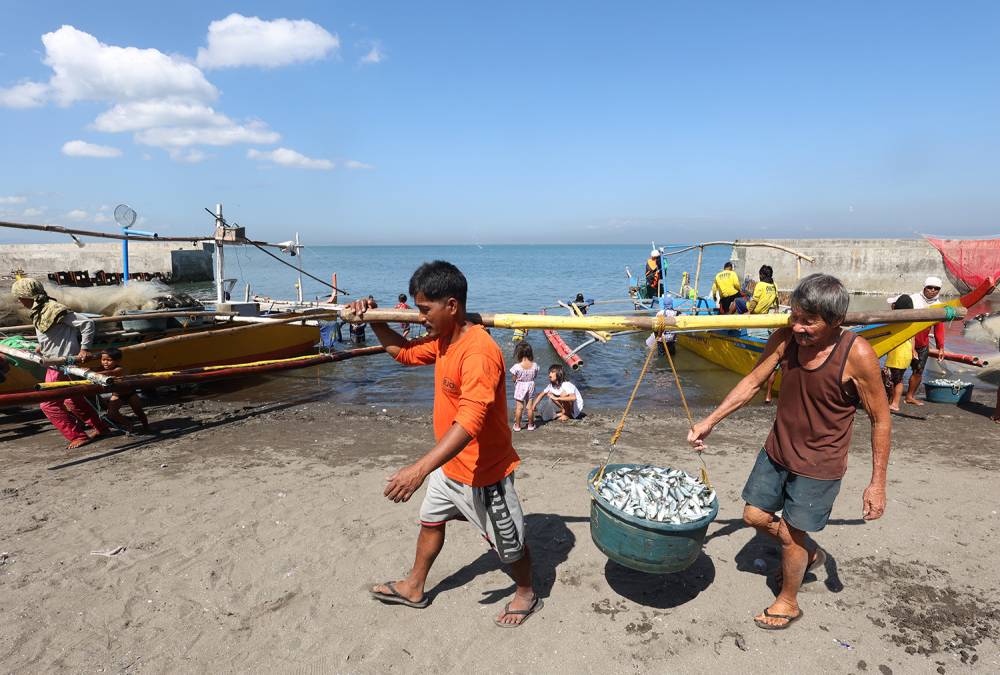
The Department of Agriculture said it will give P2,350 in aid to farmers, plus P3,000 in fuel subsidy. It will provide the same amount in aid to fishermen while the Bureau of Fisheries and Aquatic Resources will give them P3,000 in fuel subsidy.
Next spike projection
In addition to the one-time cash relief, drivers are set to receive fuel subsidies from the DOTr starting end of March, but the amount will depend on operating costs.
The main public transport vehicles—jeepneys and buses—use diesel fuel, which has soared since the outbreak of the war in Iran.
An industry source told the Inquirer on Friday that the price of diesel, which is also used by fishing boats, may go up to about P130 per liter and could still hit the P150 mark if the war inflicts more damage to critical oil facilities.
Local diesel prices may rise by P14 to P14.50 a liter, while gasoline price hikes may range from P7 to P7.50 per liter, according to the source who spoke on condition of anonymity. Private cars, motorcycles, tricycles and light utility vehicles are normally fueled by gasoline.
The potential price adjustments would be heavily influenced by concerns about a severe tightening of supply due to the destruction of major oil and gas facilities in the Middle East, according to another source—an oil company executive, who requested anonymity.
Can it go up to P150?
To reach the P150-per-liter price for diesel, the industry source said the Mean of Platts Singapore (MOPS) for diesel would need to surge to $300 per barrel. MOPS is a key pricing benchmark for refined petroleum products.
The source said seeing that spike was unlikely at the moment but was not impossible, particularly if the war wreaks greater damage to energy infrastructure that could lead to a long-term loss of supply from the region.
According to foreign wire reports on Thursday, Iranian strikes caused extensive damage to Qatar’s main gas facility.

Another factor affecting supply is the blockage of the Strait of Hormuz through which 20 percent of the world’s oil passes.
For the Philippines, 97 percent of its imports of refined petroleum products—diesel, gasoline and kerosene—are from Asian countries.
PH suppliers on pause
Energy Secretary Sharon Garin earlier said that although the majority of the supply comes from neighboring countries, the crude oil they processed was from other regions, including the Middle East. But the Middle East situation has prompted Philippine suppliers to halt their exports to the country.
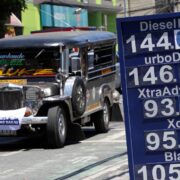
This week’s upward price movements in fuel have already pushed diesel prices to as much as P115 per liter in Metro Manila.
Based on data from the Department of Energy, diesel prices, which ranged from P47.77 to P71.90 per liter in early January, have already ballooned to P94 and P115—marking a 60-percent increase.
Gasoline, on the other hand, rose from P50 to P74.02 a liter in the first days of January, to above P90 per liter this week—about a 23-percent hike.
******
Get real-time news updates: inqnews.net/inqviber