






Gov’t scrambles to find support funds

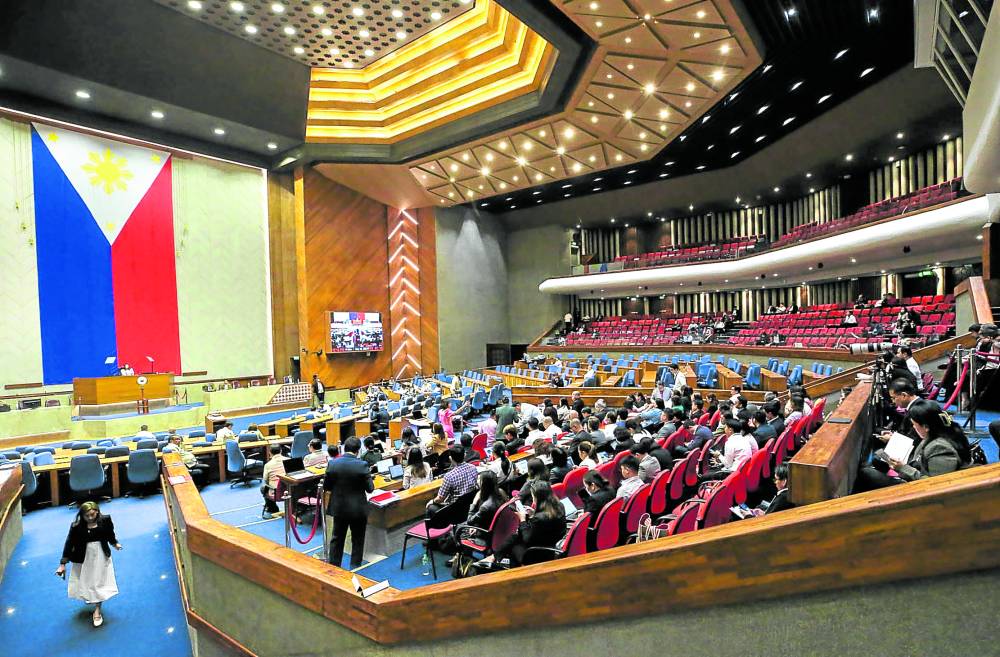
With fuel prices at historic highs and living costs climbing, where else could the government source additional funding to support projects vital to easing the economic strain from the oil crisis?
Authorities are still seeking a clear funding source to finance a supplemental budget should lawmakers call for it, but one option could be the Rice Competitiveness Enhancement Fund (RCEF), according to Budget Secretary Rolando Toledo.
“We don’t have the number yet, or we don’t have any source of funds for a supplemental budget,” Toledo told reporters on late Wednesday. “But we’re already [looking at] the RCEF [as source of] a supplemental budget.”
He said about P24 billion could be tapped from the rice fund, which is generated from rice import duties levied by the Philippines, the world’s top buyer of the grain.
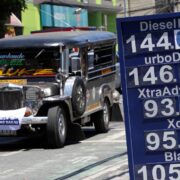
Lawmakers are considering several proposals to cushion the blow from elevated fuel costs tied to the US-Israeli war with Iran, which has driven pump prices to historic highs, as diesel prices hover around P170 per liter and gasoline near P120 per liter.
Propositions from congressmen and senators range from cutting consumption and excise taxes to providing sector‑specific subsidies, and, if funding permits, approving a supplemental budget to finance them.
“When you speak of a supplemental budget, it must come from … other revenue sources,” Toledo said, as he deferred questions on what tax streams could be tapped to feed a potential extra budget to the Finance department.
The Philippines, among the nations hardest hit by the nearly six‑week‑old Middle East conflict, has raced to shore up its energy reserves and protect an economy showing signs of strain after inflation accelerated to 4.1% in March.
Additional budget
Marikina Rep. Romero Quimbo said the House of Representative is open to considering a supplemental budget to curb inflation that risks pushing household expenses higher, while extending aid to vulnerable sectors.
“We are open to whatever is necessary,” he told the Inquirer in an interview on Wednesday night in Filipino. “This is for the purpose of controlling inflation against the oil price hike.”
Any proposal for a supplemental budget should be discussed in full by an interagency budget committee, Toledo said, as he underscored the need for a consensus among economic managers before backing additional spending.
Several senators have called for a supplemental budget to aid those affected by the war in the Middle East. Sen. Risa Hontiveros proposed a P52.8 billion in extra funding, while Sen. Francis Pangilinan urged a package focused on supporting the agriculture sector.
Quimbo, who heads a 17-panel super congressional committee tasked with crafting measures for the fuel price crisis, said there must be a clear “targeting system” to determine who will receive government aid to ensure that public funds reach those most in need.
“We’re still in the process of gathering all these things,” he said.
Lawmakers should redirect funding for lower-priority programs toward projects needed to address the fuel price crisis, John Paolo Rivera, a senior research fellow at the Philippine Institute for Development Studies, said, calling for improved spending before passing an extra budget.
“A supplemental budget may be justified if the shock becomes prolonged and significantly affects inflation, livelihoods or key sectors,” he told the Inquirer in a text message. “But it should be targeted and time-bound, focusing on the most vulnerable sectors rather than broad spending.”
“In most cases, the immediate response should prioritize reallocating existing funds and improving spending efficiency before resorting to a large supplemental budget, to preserve fiscal sustainability,” he added.
‘Belt tightening’
The budget department is also urging belt-tightening measures to sweep funds already allotted to low-priority spending, a move Toledo said could yield P12.8 billion to P25.6 billion for subsidies and social protection programs if agencies trim disbursements by at least 20% from March to December.
“Also, we are coordinating with various agencies to check their specific, critical MOOE (Maintenance and Other Operating Expenses) requirements to further refine our assumptions with the objective of … raising potential cost reduction,” he told lawmakers at a congressional hearing on the oil crisis on Wednesday.
“Nonessential” spending amid the fuel price crisis includes unnecessary travel, training camps, supplies and utility expenses, Toledo said.

The Department of Budget and Management (DBM) is drafting a circular to channel the potential savings into key government programs aimed at cushioning the economic impact of the Middle East conflict.
He also said the agency has identified about P238 billion in appropriated funding for assistance projects, opting for targeted support to vulnerable sectors rather than a sweeping across-the-board subsidy.
“There’s a prudent way of giving subsidies, that we have to target really for those specifically vulnerable sectors,” Toledo told lawmakers.
He said about P125.2 billion in allotment have been released as of April 1, with the remaining P113 billion available for disbursement. Around P200 billion was sourced from this year’s national budget, with P18.4 billion from last year’s appropriations and P20 billion from the Malampaya Gas fund, according to Toledo.
“Out of these releases, implementing agencies are … already expected to obligate P84 billion,” he said.
Meanwhile, he said the DBM has released P2.5 billion worth of assistance for the transportation sector and another P1 billion for service contracting of public utility vehicles, a program that provides drivers with weekly subsidies to keep them on their routes despite high fuel costs. INQ
Funding for the Social Welfare department’s Assistance to Individuals in Crisis Situations program has also been released, he said, without disclosing the amount. For the agriculture sector, about P10 billion has been disbursed from the Presidential Assistance to Farmers and Fishermen program.
“There are still a lot of programs and projects that are supposed to be tapped,” Toledo said, referring the Labor department’s Tulong Panghanapbuhay sa Ating Disadvantaged/Displaced Workers program and the Health department’s Medical Assistance for Indigent and Financially Incapacitated Patients.
“We can also tap [these] in response to this crisis,” he said.