










Marcos counting on coal imports for stable power

President Marcos on Thursday said the Philippines would import coal to ensure stable energy supply in the country as the war in the Middle East continues to threaten global petroleum stocks.
“We are trying to move away from coal, but because of this crisis we will reopen the importation and buying of coal so that our power plants do not run short of fuel, and to ensure that our power supply remains sufficient, especially across all parts of the Philippines,” the President told reporters on a visit to Mariveles, Bataan, where he inspected prefabricated classrooms.
The Philippines has not stopped imports for its coal-fired power plants, relying heavily on Indonesia where it gets about 98 percent of its imported coal.
Regional top consumer
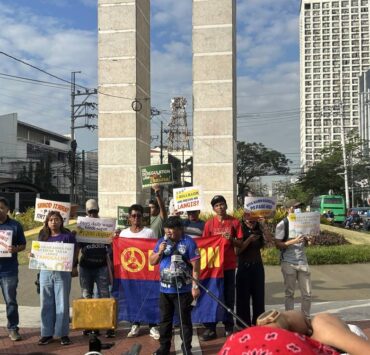
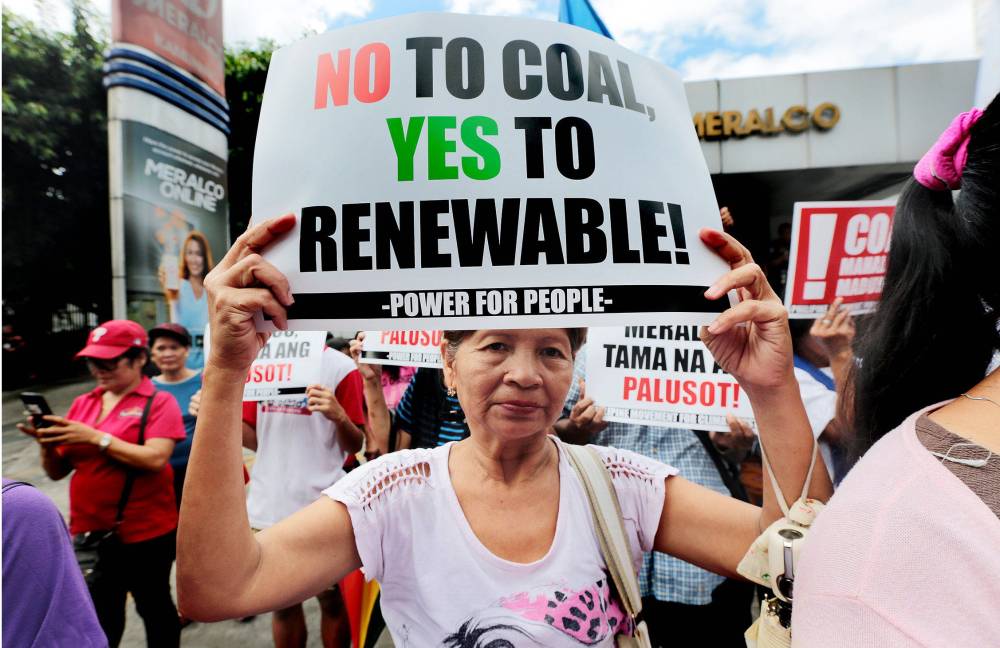
Under the Philippine Energy Plan of the Marcos administration, the government wants to scale up the renewable electricity share in the power mix to 35 percent by 2030, and to 50 percent by 2040.
Despite its energy transition efforts, the Philippines is projected to remain one of Southeast Asia’s largest coal consumers through 2030, according to the International Energy Agency (IEA).
In its 2025 coal analysis and forecast report, the IEA projected the Philippines’ coal demand to rise by 15 percent to 54 million tons by 2030, keeping the country a regional top consumer alongside Indonesia and Vietnam.
Cheapest price
Coal maintains its dominance in the Philippines as it provides the cheapest price yet delivers the most stable operation in electricity generation, despite the country’s aggressive renewable energy expansion.
In 2020, the Department of Energy (DOE) imposed a moratorium on new coal facilities to cut carbon emissions and support the government’s push to shift to clean energy. It earlier clarified that there was no total ban on developing coal-fired power plants in the country. Existing and operational facilities that have made commitments for expansion can still pursue these.
The DOE said that as of December 2025, the total installed energy capacity mix of the country consists of coal (40.6 percent), renewable energy (32.9 percent), oil-based (10.8 percent) and natural gas (15.8 percent).
Based on the overall coal statistics posted by the DOE, the Philippines imported 28.861 million metric tons of coal in 2020, 31.431 MMT in 2021, 32.910 MMT in 2022, 35.535 MMT in 2023, and 39.872 MMT in 2024.
Increased dependency
In 2023, net coal imports accounted for 67.5 percent of the country’s total coal supply, while coal made up 46 percent of total energy imports. The country imported more than 80 percent of its coal requirements in 2023 and even more than 90 percent in previous years, per data from the DOE.
According to London-based energy think tank Ember, the Philippines’ dependency on coal-fired power surged 62 percent in 2023, overtaking China, Indonesia and Poland. The share of electricity generated from coal in the Philippines climbed to 61.9 percent in 2023 from 59.1 percent in 2022, making it the most coal-dependent country in Southeast Asia.
The government has not implemented any ban or restriction on coal imports for coal power facilities, according to Meralco PowerGen Corp. (MGEN) president and CEO Emmanuel Rubio.
“The volume of coal that we import is dependent on our consumption determined by the dispatch of our coal plants,” he told the Inquirer, when asked if Marcos’ remarks on Thursday could signal a potential increase in import volume.
“With the cost of gas rising faster than coal, we expect coal plants to have higher dispatch schedules, thus the need to ensure that we have sufficient coal inventory,” Rubio added.
Alternative oil sources
Consunji-led Semirara Mining and Power Corp. accounts for about 97 percent of domestic coal production.
Rubio said MGEN “mostly” gets its coal orders from Indonesia, but other options include Australia and in some cases Russia.
Mr. Marcos also said the government was continuously looking for alternative sources of petroleum products, as oil tankers have not been able to pass through the strategic Strait of Hormuz.
“We have been in talks with our partner countries that have supply which we can source and are able to purchase,” he added.
But government officials raised concerns that other countries had temporarily restricted their exports of petroleum products to arrest potential domestic shortages and conserve their current stockpiles.
“We have already secured the Philippines’ stockpiles located abroad, and we have authorized their return so we can use them to extend our reserves. Instead of having, say, a 30-day supply, we aim to stretch it to two or three months,” the President said.
Executive Secretary Ralph Recto last week met with executives of oil companies to discuss ways to stabilize the prices of petroleum products and provide subsidies to transport groups.
“Thankfully the companies gave the assurance that whatever operational challenges in bringing the products here are manageable,” Recto said without providing details on where the petroleum products would originate from.
Target: 2 million barrels
Energy Secretary Sharon Garin earlier said the government and oil companies aim to lock in supply deals to ensure that the country’s fuel stockpiles extend beyond April.
State-run Philippine National Oil Co. (PNOC) has started the procurement process for 2 million barrels of diesel from the global market, enough to provide an additional 10 days of buffer stock.
The government was negotiating with Japan, Singapore and South Korea for possible purchase agreements. But it was also exploring alternative supply sources outside Asia, including the United States, Canada and South American countries.
The PNOC and other local players were also in talks with Russian companies to purchase crude oil, after the United States lifted sanctions on Russian crude already at sea until April 11.
Most of the country’s finished oil products come from Asian refineries, which source their unrefined petroleum from the Middle East. The Philippines has only one refinery to process crude into fuel products—the Petron refinery in Limay, Bataan.
According to the President, the public has nothing to worry about when it comes to food and oil supply, as the government is continuously monitoring prices and procuring supplies.
“We are trying to find different methods to provide assistance. The problem is the price of oil is very volatile,” he told reporters in Bataan.
Mr. Marcos said that, so far, the government would be able to “soften the blow” of the Middle East crisis on basic commodities.
Fare hike suspended
“With food, we can do more. We are looking for more ways to lower food prices,” he said, adding that there was not much the government can do about oil prices except to assure that the country could get supply.
On Wednesday, Marcos suspended a planned fare hike for public utility vehicles starting on March 19. (See related story on Page A1)
He assured transport workers, however, that the government will expedite and increase cash and fuel subsidies to help offset losses caused by rising petroleum prices.
Mr. Marcos also said that supply of synthetic fertilizer, another petroleum-based product, would not be a problem after China assured the Philippines it would not restrict urea exports to the country.
Agriculture Secretary Francisco Tiu Laurel Jr. has been reported as saying that the country was also in talks with India and Russia, as well as Belarus, as sources of fertilizer.
Tiu Laurel said the country had already secured 84 percent of its needs for this year, but the war on Iran waged by the United States and Israel has created uncertainty about whether contracted volumes will be delivered amid hits to supply and rising global prices. —WITH A REPORT FROM INQUIRER RESEARCH
******
Get real-time news updates: inqnews.net/inqviber