









Piston: Marcos should have deferred fuel tax, not PUV fare increase

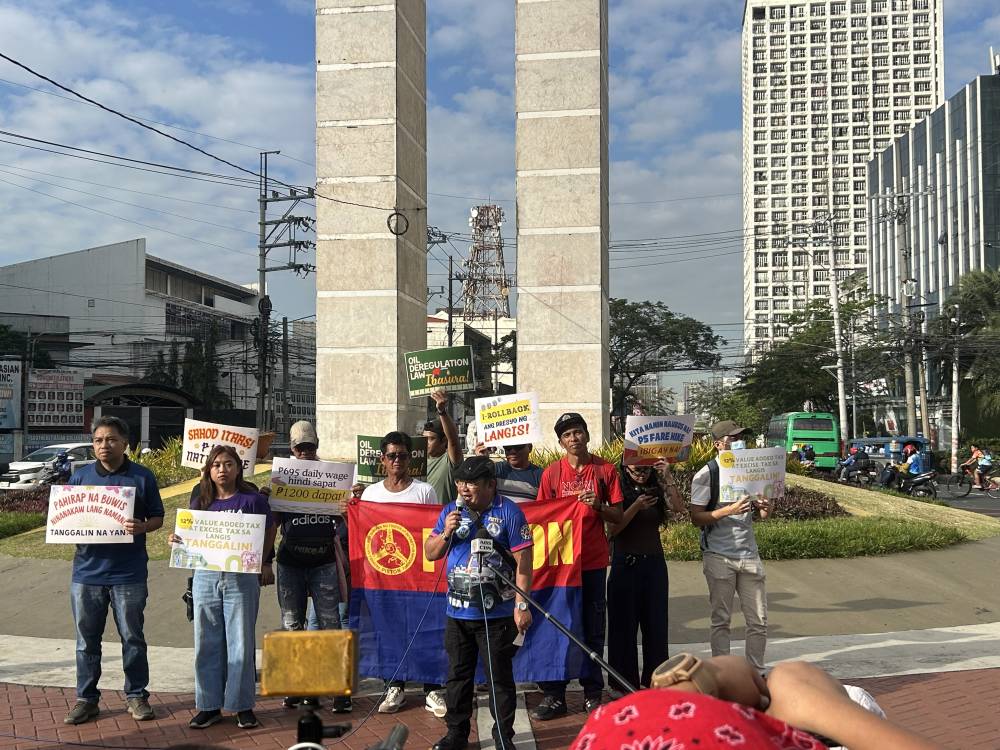
President Marcos erred in recalling a planned fare hike when he should have instead suspended the value-added tax and excise tax on fuel products, said the jeepney group Piston as it led a nationwide transport strike on Thursday to protest rising fuel costs caused by the Middle East conflict.
Piston, which stands for Pagkakaisa ng mga Samahan ng Tsuper at Opereytor Nationwide, plans to petition for a P5 fare hike before the Land Transportation Franchising and Regulatory Board (LTFRB) by end of March. It noted that jeepney drivers and operators now only earn around P200 to P300 daily in the face of major oil price hikes over the past week.
“He should have suspended the tax on petroleum products, and not the fare hike,” Piston president Mody Floranda said in an interview.
“Our basis for the submission [for fare hike] is clear, it’s not to improve the lives of drivers, but to alleviate the huge amount of money [the drivers] lost,” he added.
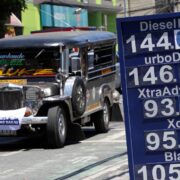
Floranda noted that, with the price of diesel climbing up to over P100 per liter recently, they spend over P3,000 a day as traditional jeepneys consume around 30 liters of fuel per day. Piston earlier called for fuel prices to be rolled back to P55 per liter.
“What else can we provide for our families? Before, we could take home around P500 to P700, but now based on our data, drivers and operators can only earn around P200 to P300,” he said.
“How will they make this work for the needs of their families, when we say that based on the family living wage, P1,200 is needed to address the needs of five people in a family?” he asked.
Mr. Marcos on Wednesday suspended fare adjustments in jeepneys, buses, airport taxis, point-to-point buses, and transportation network vehicle services, a day after the LTFRB approved the increase.
He has certified as urgent a measure that would allow the sitting president to suspend or reduce the excise tax on fuel products in case of global emergencies.
Cash aid ‘not enough’
LTFRB chair Vigor Mendoza II on Wednesday said the Department of Transportation will begin the distribution of fuel subsidies for drivers and operators next week. This will be on top of the assistance provided by the Department of Social Welfare and Development.
Floranda, however, said that while the P5,000 cash assistance and fuel subsidy can help them at some point, it is still not enough to cover expenses amid oil price increases.
“It will not resolve the current situation of the transportation sector because it will only be overpowered by the rising cost of fuel. We will only give the P5,000 back to oil companies, instead of using it to provide for our families,” Floranda said.
He urged the government to implement a P1,200 minimum wage for workers to afford basic goods and services.
In addition, Bagong Alyansang Makabayan secretary general Mong Palatino said there are other solutions available to the government.
“We have been suggesting imposing a wealth tax. Tax the billionaires,” Palatino told Inquirer in a separate interview.
“Why is the burden passed on to the poor? Why are we carrying the burden of revenue generation and not the oil companies?” he asked.
Drivers’ lament
Jeepney driver Romeo Tagan, 63, said he now only brings home P300 after plying his route from Cubao, Quezon City to Remedios, Manila, way below his previous income of P1,200 to P1,300.
“When you get home, you just turn the pot over. Because there’s no rice to cook,” Tagan, who joined the Thursday strike, told the Inquirer.
“The P300 isn’t even enough for the groceries. One trip to the wet market is P500, and it doesn’t even last the entire day. That’s why it has been the call of us drivers, that’s why we joined these things, [because] we need to bring down the price of [basic goods],” he added.
Some jeepney drivers, Floranda noted, decided to lessen their work hours to save on fuel.
“For now, it’s hard. [Unlike] the previous 12 to 18 hours of plying the roads, based on our data [drivers] have really lessened their hours. They reduced [the length of] their trips by two hours because it just goes into the fuel,” Floranda said.
Floranda said around 70,000 jeepney drivers nationwide were expected to join the strike, with 10,000 in Metro Manila. In a briefing at 5 p.m. on Thursday, he described the protest as “successful,” saying that it paralyzed 90 percent of public transport.
The Metropolitan Manila Development Authority (MMDA), however, said that it did not monitor any stranded passengers as of 4 p.m.
Long-term solutions
Several civil society organizations also joined the strike.
Clarice Palce, secretary general of Gabriela, said the groups will continue to hold protests to demand long-term solutions.
“Since the war broke out between the US and Israel against Iran, we saw how fast large oil corporations raised their prices. After that, there were also announcements of increase in rates of electricity and fuel,” Palce said. “Meanwhile, those in poverty, the poor families, even the middle-class, their income is not raised.”
Kabataan party list Rep. Renee Co criticized the President for only implementing “band-aid” solutions.
“He (Marcos) needs to take the calls of the public seriously,” Co said as she called for an increase in wages, the suspension of excise tax and VAT, a fare increase for jeepney drivers and a repeal of the oil deregulation law.
Mr. Marcos, meanwhile, said the government was trying to find different ways to provide subsidies and aid. But he did not elaborate on the budget sources of such subsidies.
“The problem is that oil prices are very volatile and difficult to anticipate, so we’re still adjusting right now,” the President said following his inspection of newly installed prefabricated classrooms in Mariveles, Bataan.
“As much as possible, the public should not worry. We are securing the supply of oil. We are securing the supply of food. And so far, our stockpiles of oil and food are sufficient,” he said.
He reiterated the implementation of austerity measures across government, including a directive to reduce energy consumption by at least 10 percent.—WITH A REPORT FROM DEXTER CABALZA
******
Get real-time news updates: inqnews.net/inqviber