









SC, CBCP, and I agree on dynasties, but…

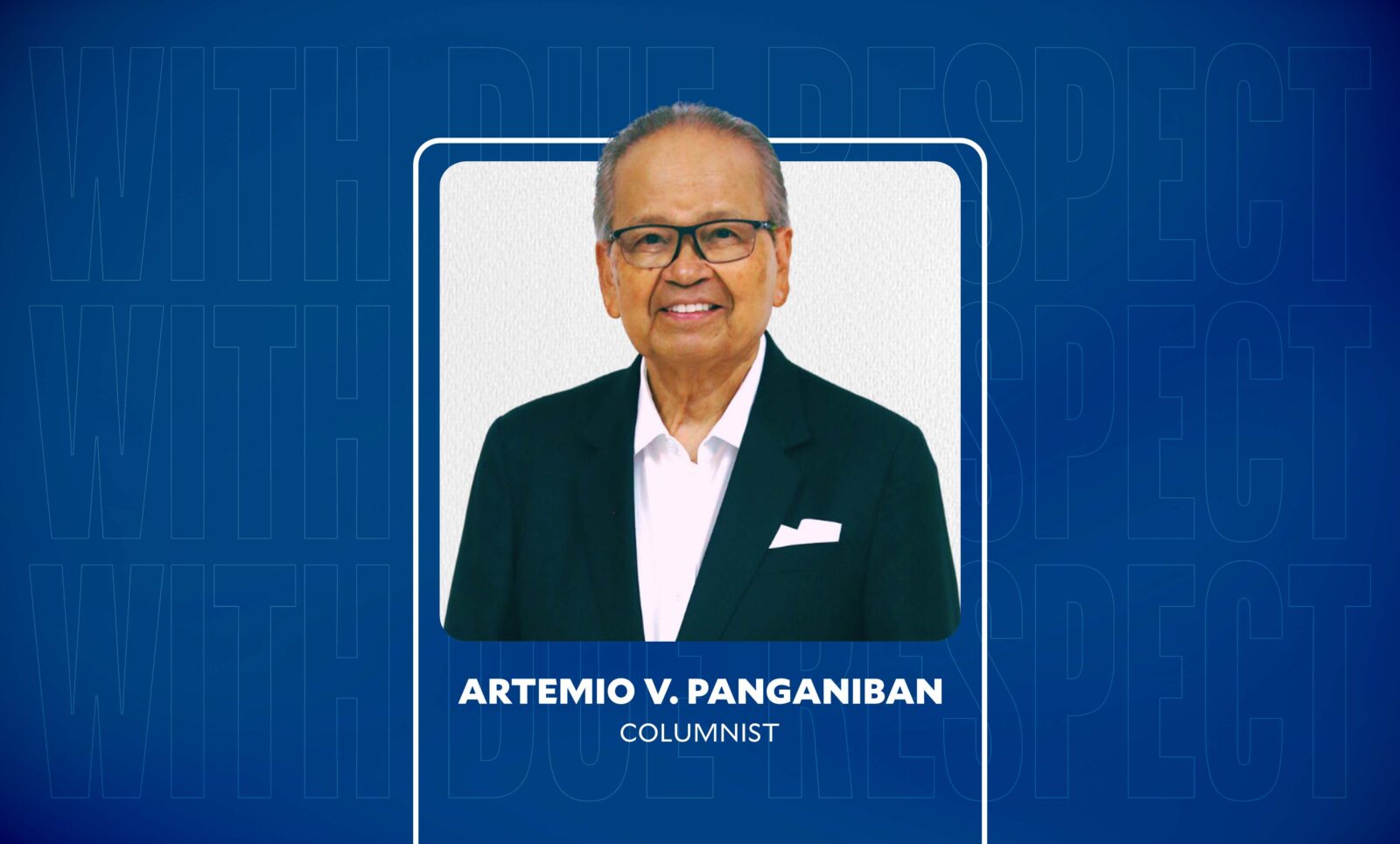
The Supreme Court, the Catholic Bishops’ Conference of the Philippines (CBCP), and my column last week agreed that political dynasties should be reformed. However, while the Court and the CBCP likewise agreed with the Constitution that political dynasties should be prohibited, I maintain, with due respect to the Constitution’s framers, that they should be merely regulated, not prohibited.
TO RECALL, THE COURT UNANIMOUSLY DIRECTED CONGRESS—”with utmost urgency”—to enact an anti-political dynasty law (Kapatiran Party v. Congress, Aug. 26, 2026, per J Ramon Paul L. Hernando, en banc). Moreover, the Court proposed—but did not require—that (1) The ban should extend to the fourth civil degree; (2) Covered relatives should be barred from running simultaneously and/or successively; (3) The ban should encompass local and/or national elective positions; and (4) The ban should apply within the same administrative region.
On the other hand, the CBCP, in its Sept. 25 Pastoral Statement, stressed that: (1) The concentration of dynastic power stifles competition and accountability; (2) Public office is a public trust that must remain accessible to all competent Filipinos; and (3) The laity should courageously ask difficult questions about dynastic rule.
As for me, the dynastic prohibition up to the fourth civil degree is contrary to human nature. It is natural for parents to want their children to succeed them in their work, profession, wealth, or business. To attain this succession in public offices, systemic solutions are needed. Let me offer three.
The first is voter education. Even if likened to a perfectly engineered car, our democratic machinery will inevitably crash if entrusted to the hands of an untrained or careless driver. Thus, voters must be properly trained to choose competent leaders of integrity. In fact, the Parish Pastoral Council for Responsible Voting—organized in 1991 by Ambassador Tita de Villa—deserves the continuing support of the CBCP. I believe a new wheel need not be invented, as the lay faithful already have an existing cart to steer the electorate away from the toxic culture of the three Ps—payoff, personality, and patronage and the three Gs—guns, goons, and gold.
My second suggestion is to encourage competent and honest men and women to run for public office to give the educated voters fair choices. As such, the dynasts need not be prohibited from joining the election given that the electorate is already equipped to choose the best regardless of patrimonial roots.
OUR POLITICAL HISTORY PROVES THAT PEOPLE OF COMPETENCE AND HONESTY can transcend their political lineage. The late President Cory Aquino, despite belonging to a powerful dynasty, championed the 1987 Constitution that ironically prohibits political dynasties.
Similarly, the late Sen. Jose W. Diokno—himself a son of a senator and Supreme Court justice—proved his competence and brilliance by topping both the CPA and bar exams and demonstrated unyielding integrity by resigning as justice secretary rather than compromise during the Stonehill scandal. Likewise, my guru, former Senate President Jovito R. Salonga, an intellectual of the highest order, earned the masses’ trust through his selfless and tireless advocacy for the marginalized.
My third suggestion is to strengthen our civil service to insulate the bureaucracy from political patronage. To become a part of the professional civil service, one must pass different levels of examinations, possess formal education, and undergo training. These civil service eligibles should occupy permanent appointments to positions up to the rank of undersecretaries and should be removable only for cause and after due process, unlike in the present when they are removable at the whim of the President.
By retaining their posts across changing administrations, a permanent civil service guarantees operational continuity. This explains why progressive nations like Japan and Great Britain function efficiently regardless of who is elected at the top and regardless of rapid changes of political leaders.
AT BOTTOM, THE SUPREME COURT HAS ALREADY SPOKEN WITH URGENCY, and the CBCP has wisely placed the issue before the conscience of the nation. But the task ahead is far larger than enacting a law to prohibit what is human nature. Instead, we must educate voters, encourage a pool of competent candidates of unyielding integrity, and strengthen our civil service to guarantee continuity in governance.
Truly, there is no law—no matter how perfectly defined—that cannot be violated, manipulated, or circumvented by malevolent officials. Therefore, the ultimate solution does not lie merely in passing legislation or dismantling a political system, but rather, in metanoia—a conversion of mind and character forged through education and training of the men and women who seek to hold the sacred trust of public office, and the electorate equipped to make the right choices.
Only through such transformation can we secure an inclusive democracy steadfastly navigated by officials selected by the informed choice of the people for their truthfulness, fairness, integrity, and competence.
—————-
Comments to [email protected]

The hidden dollar tax on Philippine AI startups