











Industrial sector’s halo effect on PH property


The industrial sector remains competitive, as shown by industrial park developers’ aggressive expansion.
Players with massive footprint in Central and South Luzon continue to capture demand from high value manufacturers and this presents tremendous opportunities for the sector beyond 2026.
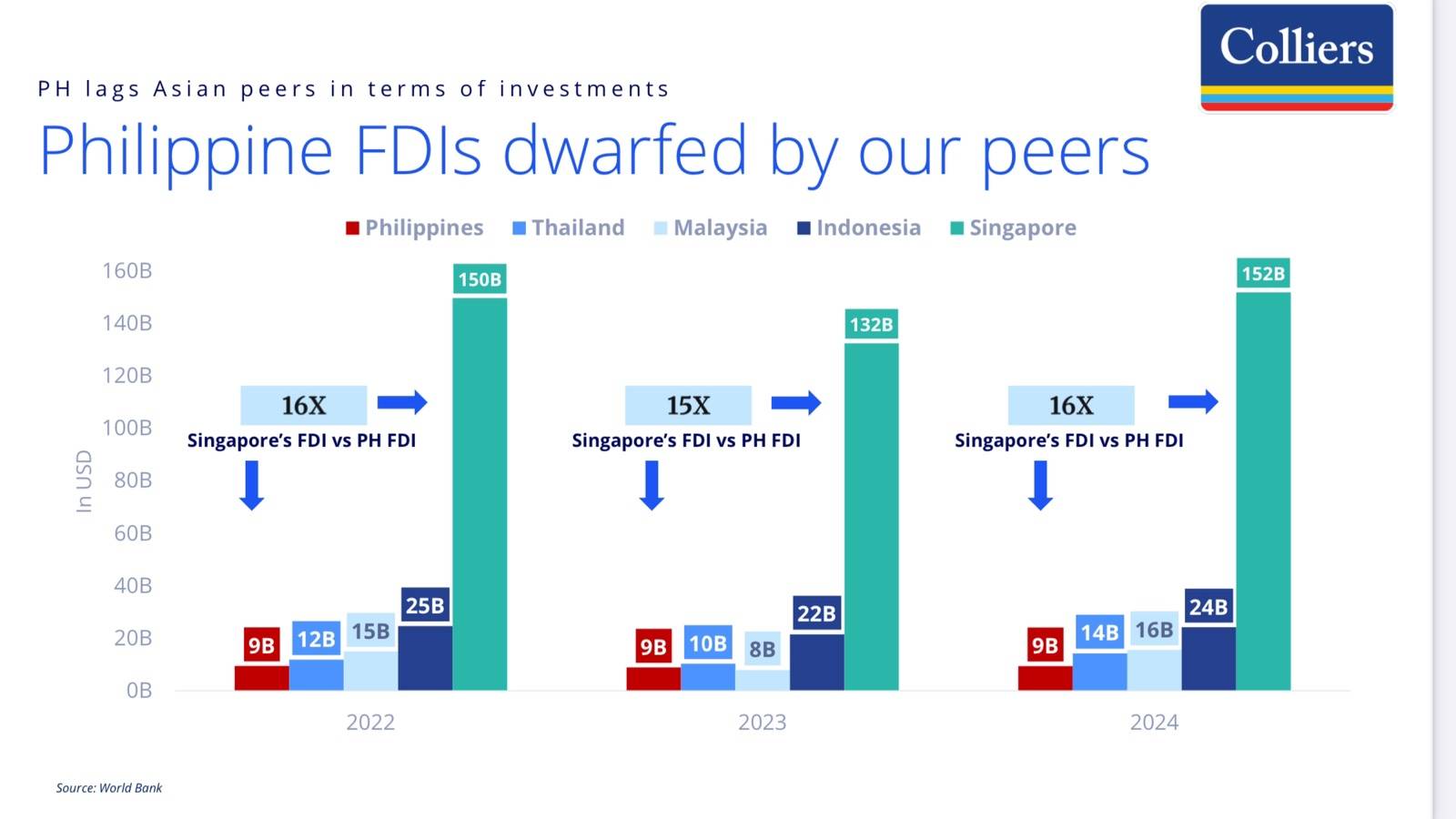
Colliers Philippines believes that raising industrial competitiveness is crucial to attracting foreign direct investments. In our view, these big-ticket investments will have a positive impact on the industrial sector, with benefits likely to spill over into other property segments, including office, residential, and hospitality.
More PEZA-accredited warehouses in Central Luzon
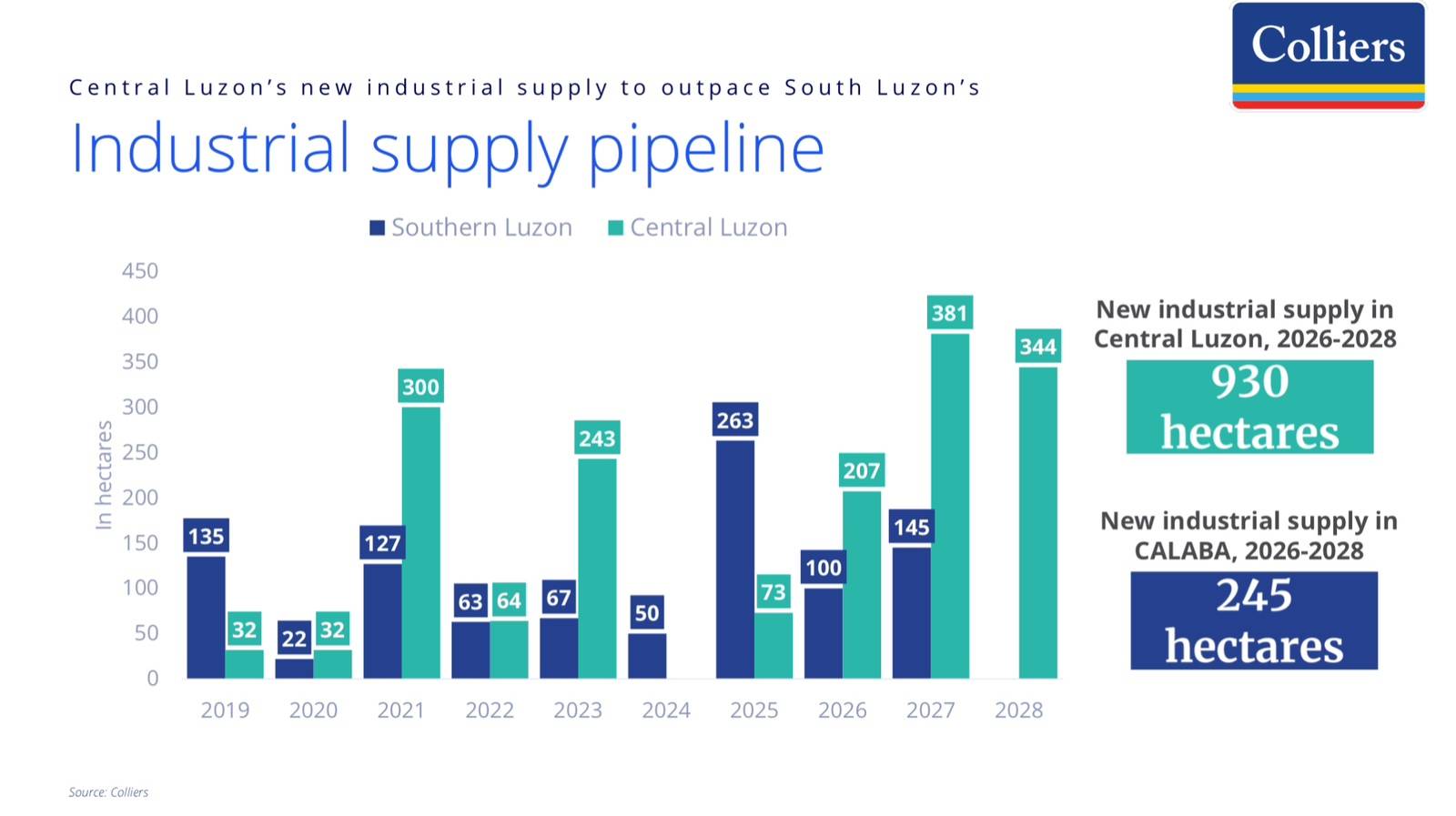
From 2026 to 2028, Colliers sees the delivery of 930 hectares of new industrial supply in Central Luzon, dwarfing the expected 240 ha in Southern Luzon during the same period.
Given the improving business environment and bullish prospects for the region, we see higher-value manufacturers locating in Pampanga, Tarlac, Bulacan, and Bataan.
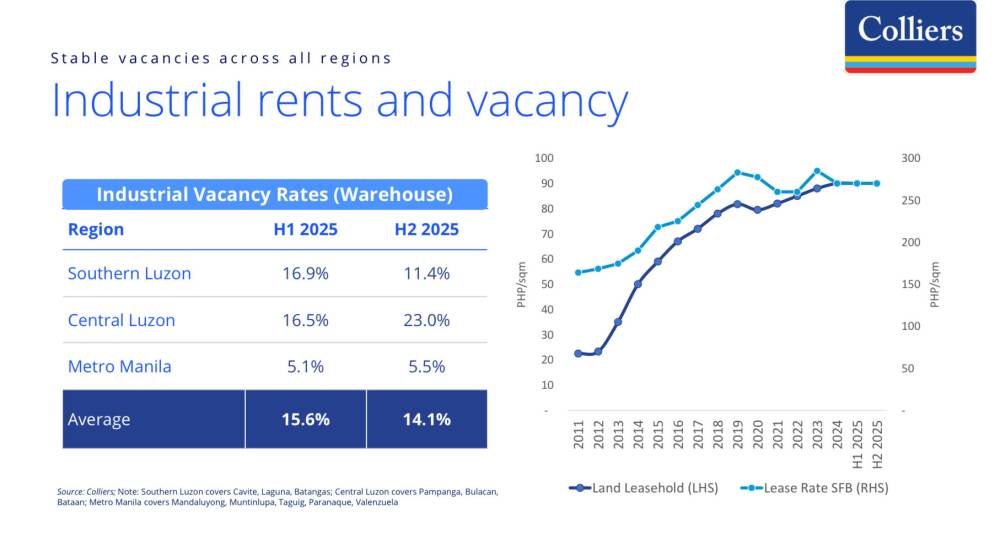
Colliers believes that Central Luzon remains a viable industrial location outside of Cavite-Laguna-Bacolod (Calaba) corridor given the availability of skilled manpower and improvements in infrastructure. The completion of significant industrial supply in Central Luzon should provide opportunities for manufacturers and locators to haggle for more competitive lease rates.
Industrial park and warehouse developers in Central Luzon should be mindful of the requirements of new and expanding locators in the region. We also encourage industrial developers to build more PEZA-accredited warehouses in Central Luzon, especially in Clark in Pampanga and New Clark City in Tarlac due to their strategic locations and proximity to the Clark International Airport.
Maximize investments from traditional markets, explore new ones
Colliers believes that developers and operators of industrial parks and warehouses can maximize the government’s manufacturing push by actively targeting investments from the country’s traditional and non-traditional partners.
Aside from China, investment promotion agencies (IPAs) such as the Philippine Economic Zone Authority (Peza) are actively attracting investments from Japan, South Korea, Singapore, Thailand, Taiwan, and Malaysia.
Various reports showed that Peza is also prioritizing industries such as automotives, pharmaceutical, and electronics which, in our view, should result in greater industrial space absorption across the country. Developers and industrial stakeholders should also target export-oriented industries proven to be relatively resilient to global tariff pressure.
Big-ticket manufacturing investments to drive industrial demand
IHS Markit reported that the Philippine Manufacturing Purchasing Managers’ Index (PMI) rose to 50.2 in December 2025, after declining to 47.4 from the previous month.

According to IHS, the drop in November can be attributed to low orders and typhoon disruptions in the country. This also prompted manufacturers to reduce their staff headcount.
Despite subdued manufacturing activities, Colliers Philippines sees the industrial sector thriving as the Philippine Statistics Authority (PSA) reported that the approved foreign pledges for manufacturing projects amounted to P81.4 billion in 2025. An improvement in global investor sentiment should support a more sustainable expansion of industrial activities moving forward.
The Calaba corridor remains the country’s primary industrial hub, attracting new and expanding manufacturing tenants. Some of the locators that recently occupied industrial space in this corridor include manufacturers of printers, airconditioners, air fresheners, and electronics.
Among the big-ticket manufacturing investments in the corridor include Samsung, which is investing P58 billion for a new manufacturing facility in Calamba Premiere Industrial Park in Laguna. Panasonic is also investing P3 billion to operate as a domestic market enterprise and launch new projects in Laguna Technopark. The company plans to manufacture refrigerators and washing machines.
Hopefully the Philippines attracts more big-ticket manufacturers in the years to come to make the country at par with industrial powerhouses in the region including Thailand, Indonesia, and Vietnam.

(With a report from Julius Guevara, senior director and head of Capital Markets and Investment Services at Colliers Philippines)