






10,000-year-old mummies found in China, Southeast Asia

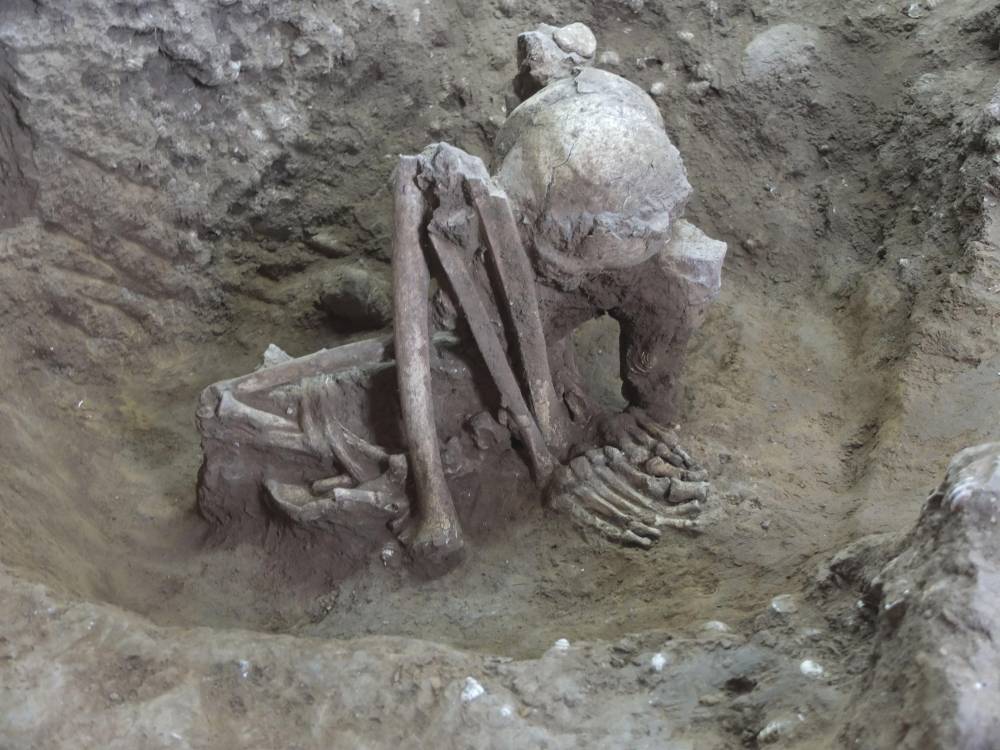
Human bones discovered across southern China and Southeast Asia were intentionally smoke-dried over fire, with some dating back more than 10,000 years, predating the mummification practices of a culture long thought to be the world’s earliest, a recent study has found.
Researchers analyzed remains from 54 preNeolithic burials at 11 sites in China, Vietnam and Indonesia, dating from 3,600 to 11,000 years ago, some predating the mummification of the Chinchorro culture in northern Chile around 7,000 years ago and that of ancient Egypt.
They used multiple techniques, including X-ray diffraction and Fourier-transform infrared spectroscopy and found that 80 percent of the remains had been heated at low temperatures for long periods, resulting in mummification.
10-year-old burial method
A similar burial practice was observed among Indigenous people in Papua Province in eastern Indonesia until about 50 years ago. When a family member died, the body was folded and smoked over a fire for one to two months, drying it with heat and smoke.
At sites across Southeast Asia, smoked skeletal remains in crouched positions have been excavated, said Hirofumi Matsumura, corresponding author of the study and professor emeritus at Sapporo Medical University, explaining that the burial method used in Papua until recently has existed across Asia for at least 10,000 years.
Cranial features
He also said the skulls share cranial characteristics with indigenous Papuans, including pronounced brow ridges, suggesting a wide distribution of hunter-gatherer groups that migrated from Africa.
The study also reported that “flexed and squatting burials” were found on the Korean Peninsula, and that in Vietnam, a charred human clavicle fragment yielding a radiocarbon date of around 14,000 years ago was excavated.

Matsumura suggested that methods for preserving bodies by smoking them developed and spread across Asia because of the region’s high humidity.
‘Rich spirituality’
“The rich spirituality that gave rise to a burial method designed to mourn the deceased for as long as possible at a time when only stone tools existed was more widely shared than we might imagine,” he said.
The study was conducted by Hsiao-chun Hung of the Australian National University and 22 other researchers from institutions including Peking University, and was cited as one of the “Top 10 Discoveries of 2025” by Archaeology Magazine.