












Sports economy: Women athletes lure smart money

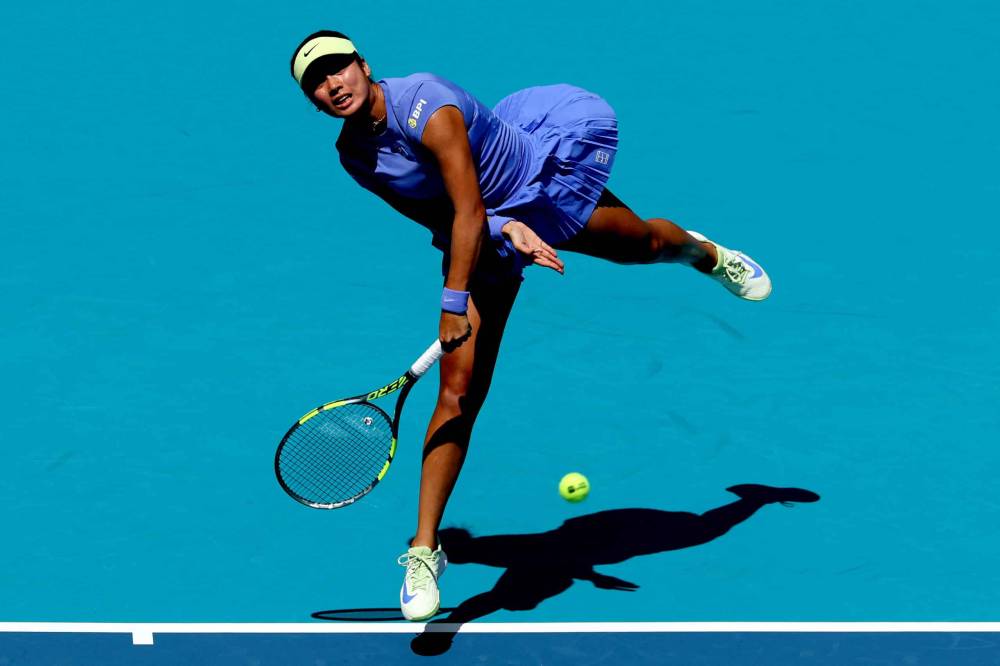
When Filipina tennis prodigy Alex Eala steps onto the court, she brings more than the weight of national pride. She also carries the strong backing of the brands that had placed their faith in her long before the spotlight grew brighter.
Her achievements—including becoming the first player from the Philippines to win a Grand Slam junior title—have cemented sponsorships from Nike, Babolat, Globe Telecom and Bank of the Philippine Islands—names she wears with quiet confidence on her match-day gear.
For those companies, backing women athletes like Eala is increasingly a business decision as much as a branding one.
Women’s sports are among the fastest-growing segments of the global sports industry, with expanding fan bases, rising sponsorship revenue and greater visibility, according to Bank of America (BofA).
In a note to clients, the bank identifies about 58 companies—with a combined market capitalization of roughly $14 trillion and about $1.1 trillion in US dollar and euro bond face value—that sponsor major women’s sports leagues across the United States, Europe, the United Kingdom and India.
Companies sponsor sports for many reasons, the bank says, but visibility often sits at the center. In women’s sports, sponsorship can deliver exposure in ways that broadcasting has long done for men’s competitions.
“They may want to connect with an audience, so they consider how a sport drives their brand. There may be a revenue impact: fans are influenced by sponsors to buy a product,” BofA says.
The bank adds that sponsorship can also deepen community engagement, open doors to new clients and build employee pride and loyalty.
The strategy reflects the scale of the opportunity
The global sports economy is valued at about $2.3 trillion and is forecast to expand at a 10 percent compound annual growth rate to roughly $3.7 trillion by 2030, according to the World Economic Forum.
Women’s sports still account for only about 2 percent of the total, but BofA says a future shaped by artificial intelligence and robotics—one that could leave people with more free time and less employment pressure—may push more spending toward sports and leisure.
Women’s sports revenues are expected to have more than tripled from 2022 to 2025, surpassing $1 billion for the first time in 2024 at about $1.88 billion, BofA says.
In the United States, revenues could climb 250 percent to $2.5 billion by 2030, according to McKinsey & Company, driven by brand sponsorships, followed by rising ticket sales, broadcast rights and merchandise.
Sponsorships in women’s sports are also growing 50 percent faster than in men’s sports, the World Economic Forum says, rising 2.5 times between 2019 and 2024, according to Nielsen Sports.
Wanted: More visibility, investments
“Women’s sports are growing fast, with Gen Z linking sports organizations to personal and social standards, Millennials proving most receptive to brand sponsors, and people of all ages seeking greater visibility for their favorite sports and the female stars who are playing them,” BofA says.
“These aren’t simply men’s sports played by women; women’s games have their own atmosphere, and they are pioneering unique and evolving relationships with fans and sponsors,” it adds.
Even so, challenges remain. Women’s sports still face limited long-term funding, weaker infrastructure, an underdeveloped talent pipeline and constrained media exposure, BofA says.
“Investors tend to approach women’s sports with a short-term return-on-investment expectation. Sports are also competing for fans’ attention on an increasingly crowded playing field,” the bank said.
“Women’s sports need visibility, investment and time,” it adds. “This means purpose-driven brand partnerships, digital-first strategies and broader media coverage, improved facilities and longer-term investment.”



Leveraging the power of foresight