
Cavite takes flight: Formidable gains in sight


Cavite is fast shedding its “bedroom suburb” tag and emerging as a full-fledged growth corridor outside Metro Manila.
Office grew in 2025, fueled by business process outsourcing (BPO) firms chasing talent and lower rents, translating to a sharp jump in transactions and a return to positive net take-up.
Residential demand remains anchored by end-users and investments by overseas Filipino workers (OFWs), with affordable and mid-income projects leading the charge.
Tagaytay, meanwhile, continues to capture demand for upscale projects.
Beyond residential developments, Cavite is capitalizing on tourism, industry, and infrastructure momentum.
Leisure projects are gaining traction on the back of rising domestic travel and stronger connectivity, positioning the province as a future meetings, incentives, conferences, and exhibitions (MICE) and hospitality hub.
Meanwhile, industrial expansion remains a key growth engine of Cavite, with global manufacturers and logistics players occupying more industrial space and further tightening vacancy and driving demand for new industrial parks.
Across Calabarzon, Cavite stands out as a prime destination for masterplanned community construction.
Cavite office emerges and surges
The Cavite office market was the fifth most active provincial market in 2025, posting 12,000 square meters of office transactions, up from 700 sqm a year ago.
Most of the deals recorded in Cavite came from expanding BPO firms looking to tap a wider talent pool and benefit from more competitive office rents.
BPO firms have recently expanded their footprint in Cavite, resulting in a net take-up of 1,500 sqm as of end 2025. This indicates growing confidence in Cavite’s office market.
In 2025, Cavite’s office vacancy rose to 49 percent from 45 percent a year ago due to the delivery of new office spaces. Cavite’s total stock stands at 176,000 sqm, with most of the buildings located in Imus, Bacoor and Kawit. In our view, these areas remain as one of the province’s key business districts, due to mature infrastructure and proximity to Metro Manila.
Stable residential demand
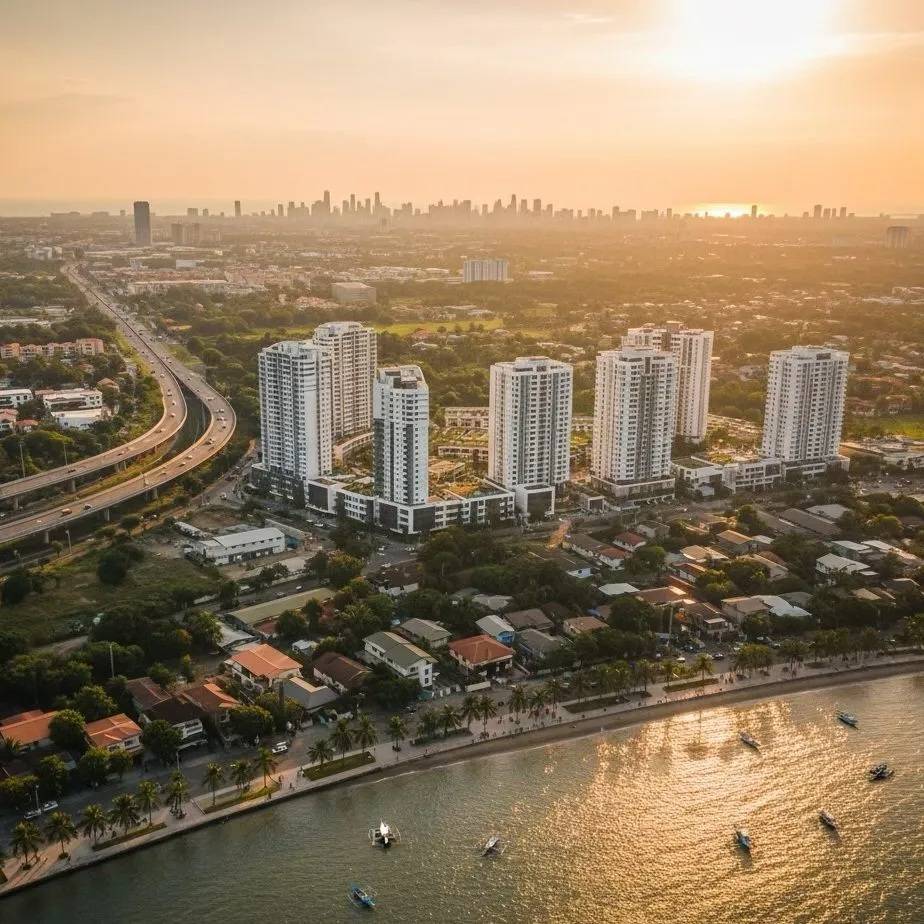
As of end 2025, Cavite’s condominium stock reached 20,300 units, the largest in Southern Luzon.
The affordable to lower mid-income segments (P2.5 million to P7 million a unit) accounted for more than 70 percent of total condominium take-up in the province in 2025.
The steady inflow of remittances also ensures stable demand for horizontal units.
It helps that the Calabarzon Region covered close to a fifth of deployed Filipinos for overseas employment in 2024, according to latest data from Philippine Statistics Authority (PSA).
For Cavite’s house-and-lot (H&L) market, the economic projects (P580,000 to P2.5 million) are well-received among local end-users especially for projects located in General Trias, Imus, Tanza, and Dasmariñas.
Meanwhile, upscale to luxury projects accounted for nearly 60 percent of total take-up for lot-only projects in 2025.
The appetite for lot-only projects is strong and we believe that demand is coming from both end-users planning to build their houses in the future and investors banking on the lot only projects’ price appreciation potential.
The most expensive residential lots in Cavite are priced from P30,000 to P66,000 per sqm with sizes of between 130 sqm to 660 sqm.
The allure of Cavite leisure
Colliers Philippines believes that it is imperative for property firms to take advantage of the rising demand for resort-themed projects across the country.
For one, these projects are banking on the revival of the Philippine tourism market, which the Marcos administration continues to aggressively promote.
Leisure-themed developments also benefit from improving connectivity.
Major projects in the Cavite-Laguna-Batangas (Calaba) corridor, for instance, are taking advantage of improving access from Metro Manila to Southern Luzon.

Hordes of people visit their favorite destinations in the south during weekends and holidays, and the ease of travel has been facilitated by the completion of major public projects.
Industrial is pivotal
In Calaba, Cavite remains a thriving industrial hotspot.
Over the past 12months, Colliers saw manufacturers of electronics, air conditioner, equipment, batteries, as well as cold storage operators taking up industrial space in Cavite.
With continued take-up from locators and manufacturers, industrial vacancy in Cavite dropped to 5.3 percent in 2025 from 6 percent in 2024.
Colliers encourages property developers to explore more parcels of land in Cavite that are ideal for industrial or commercial developments.
We see Cavite’s further emergence as a major property investment destination upon the completion of major infrastructure projects.
This should raise the province’s viability for more industrial park and integrated community developments.
Overall, Cavite’s transformation into a dynamic growth corridor is accelerating, underpinned by diversified demand across office, residential, leisure, and industrial segments.
Strong BPO expansion, resilient end-user housing demand, rising tourism, and sustained manufacturing activity collectively reinforce the province’s investment appeal.
As businesses and residents increasingly anchor in Cavite, the locality is evolving into a self-sustaining urban enclave—one that offers scale, affordability, and connectivity.
This shift positions Cavite as a key strategic destination for long-term property investment and development.