
PH manufacturing activity contracted in April as war bites

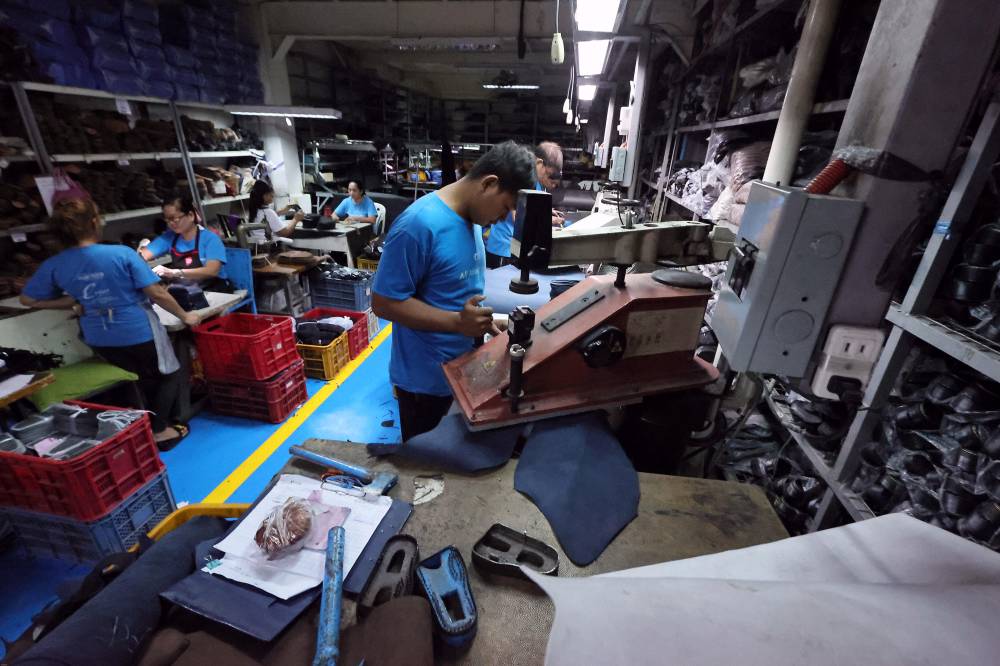
The fallout from the Middle East war continued to ripple across the Philippine manufacturing sector, dragging factory activity into contraction territory in April for the first time in five months.
The latest S&P Global survey of around 400 companies showed the Philippines’ Purchasing Managers’ Index (PMI) fell to 48.3 from 51.3 in March, dropping below the 50-point threshold that separates growth from contraction.
It also marked a “renewed worsening of operating conditions” as the sector entered the second quarter of the year. The PMI began to deteriorate in March, when the war first escalated.
“Demand conditions took a notable hit, with April data marking a sharp fall in new orders. Total new sales were also weighed down by a deteriorating export demand picture,” said Maryam Baluch, economist at S&P Global Market Intelligence.
“Moreover, production levels stagnated, and firms made cuts to purchasing and hiring activity as they grappled with high costs, often said to be feeding through from the war in the Middle East,” she added.
According to the report, the drop in new export orders was the steepest since the pandemic, with manufacturers pointing to trade flow disruptions that halted shipments, weighed on orders and prompted customer hesitancy.
Rising operating expenses triggered by higher oil prices were also passed on to clients, S&P said, with the rate of selling price inflation accelerating to its fastest in more than three years. In turn, new orders declined further, while firms cut jobs for the first time in 2026.
Further, the April data suggest the war is now inflicting “real demand-side damage,” beyond a simple cost squeeze.
Leonardo Lanzona, an economist at Ateneo de Manila University, pointed to the emergence of job cuts as an early sign of deeper strain.
“Demand destruction from route disruption is recoverable. Demand destruction from customer relationship loss—where buyers shift to alternative suppliers—is structural and sticky,” Lanzona said.
“If the contraction persists for two or three months, labor shedding could become more pronounced. Given that January 2026 already showed elevated unemployment from the DPWH (Department of Public Works and Highways)sector collapse, a manufacturing employment shock would compound an already stressed labor market,” he added.
Latest labor force data have yet to capture the full impact of the conflict, although economists and state statisticians are already expecting labor conditions to weaken from March onward. The Philippine Statistics Authority is set to release March labor force data this week.
Aside from hiring cuts, John Paolo Rivera, senior research fellow at the Philippine Institute for Development Studies, said a prolonged conflict could prompt firms to scale back production further and delay investments.
“The impact is likely to be gradual rather than abrupt, with essential and domestic-oriented industries remaining more resilient. The key risk is if cost pressures persist long enough to affect broader demand and business confidence,” he said.
Even so, the S&P report noted that Philippine firms remain optimistic, with business confidence rising to a 17-month high on expectations that demand and client bases will improve in the coming months.