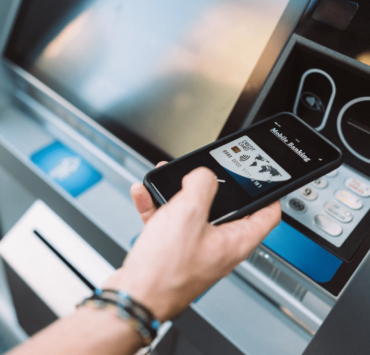







Waiving digital banking fees


State-run Land Bank of the Philippines started the ball rolling last May when it reduced InstaPay digital transfer fees for person-to-person transactions from P15 to P8 starting May 21, then waived its fees on select online government payments from June 1 until Dec. 31, 2026, as part of its efforts to make everyday banking more affordable for Filipinos.
Then the Bangko Sentral ng Pilipinas (BSP) built on that momentum when it issued Circular No. 1238, which amends the National Retail Payment System Framework and the Regulatory Framework for the Merchant Payment Acceptance Activities and paves the way for “responsible pricing and market conduct” by banks, e-wallets, and payment service providers.
“The pricing mechanism should be designed to uphold fairness across end-user groups,” the BSP circular said, taken to mean that service providers should not make a killing from digital transactions that have become a part of everyday life for an increasing number of Filipinos.
The BSP clearly spelled out that these electronic payment fees should be lower than the manual or over-the-counter charges.
“The BSP sees this as a step toward making digital transactions even more mainstream,” BSP Governor Eli Remolona Jr. said, adding this “can help improve efficiency across the payments system, reducing costs for everyone.”
Domino effect
Ayala-led Bank of the Philippine Islands (BPI) took the spirit of the circular to heart and turned the banking industry on its head when it permanently waived fund transfers to other banks and e-wallets via InstaPay and PESONet on the BPI app starting July 1.
Prior to the circular, BPI app users were charged P10 for InstaPay transactions and P50 for PESONet transfers when sending funds through the BPI app.
“Making interbank transfers free is a meaningful step toward enabling our customers to move their money more freely, while strengthening adoption of secure and convenient digital banking,” said BPI President and CEO Jose Teodoro “TG” Limcaoco.
That led to a domino effect as more financial institutions either waived or reduced their own fees, thus encouraging further adoption of digital payment or banking channels.
From universal banks such as Rizal Commercial Banking Corp., Security Bank Corp., Metropolitan Bank and Trust Co., Union Bank of the Philippines and East West Banking Corp. to digital banks GoTyme Bank Corp. and Maya Bank Inc., thrift banks and rural banks, their users can now enjoy online financial transactions without having to pay too much for them.
Even mobile finance giant Gcash reduced its bank transfer fee to P10 from P15 starting July 4.
Positive and lasting impact
As an offshoot, the BSP said digital fund transfer transactions have climbed between 10 and 50 percent since banks and e-wallet providers cut their transfer fees.
The fee reductions rolled out in a matter of days demonstrates that sound, timely and well-crafted regulation that balances the need to ensure sustainability of private enterprises while championing the urgent needs of the public can have an immediate positive and lasting impact. Finance Secretary Frederick Go had repeatedly said that he was “upset” at the high transaction costs, thus he campaigned for Landbank–which he chairs–to lower its fees, stressing that “reducing digital transaction costs is a crucial step in bringing more Filipinos into the formal financial system.”
Indeed, the International Monetary Fund (IMF) noted in a June 2025 report that Filipino users typically paid higher digital retail transaction fees than others in the region, no thanks to the presence of multiple payment networks, standards and providers that obstructed seamless transactions.
Thus while other countries including Singapore, Thailand, and Vietnam do not impose fees for small, person-to-person transactions, most commercial banks in the Philippines typically charged P10 to P25 a transaction with fees for corporate clients reaching up to P500 a transaction, said the IMF report.

Main barriers
Filipino users have also long complained about high costs as reflected in the BSP’s Consumer Expectations Survey for the fourth quarter of 2025, which found that one in three Filipino consumers saw high fees as one of the main barriers to the more frequent use of digital payments.
But while the fee cuts are indeed a welcome development, the government and the private sector should not stop there. Rather, they should seize the moment and work together to solve the underlying factors that led to the high costs in the first place.
As pointed out by the IMF, navigating through disparate systems means additional processing costs that are ultimately passed on to the already burdened customers.
These inefficiencies should thus be immediately resolved so that digital transactions across the board will indeed be seamless and cost-efficient, bringing the BSP closer to its goal of converting as much as 70 percent of total payments to digital channels.
This way, the low to zero digital transaction fees will be the norm rather than the exception.
******
Get real-time news updates: inqnews.net/inqviber