


US examining latest Iran proposal on Hormuz unblocking

The White House said on Monday that it was examining Iran’s latest proposal to unblock the Strait of Hormuz, two months after a US and Israeli offensive sent shock waves through the global economy.
Peace talks between the United States and Iran to end the Middle East war and fully reopen the vital strait have so far proven inconclusive since a ceasefire came into force.
Trump met with top security advisers on Monday to discuss an Iranian proposal after Tehran passed “written messages” to Washington via Pakistan, spelling out its red lines in negotiations, including on nuclear issues and the Strait of Hormuz, the Fars news agency reported.
The proposal was “being discussed,” spokesperson Karoline Leavitt told a White House briefing.
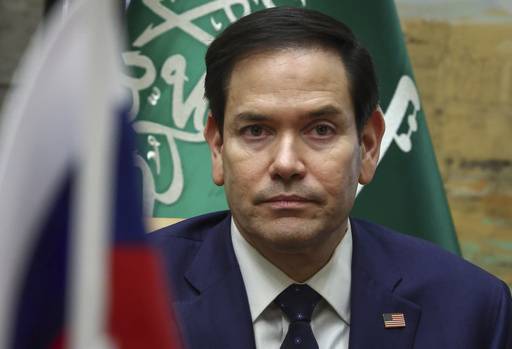
Asked about the terms of Iran’s proposal, Secretary of State Marco Rubio told Fox News “it’s better than what we thought they were going to submit,” but questioned whether it was genuine.
“We have to ensure that any deal that is made, any agreement that is made, is one that definitively prevents them from sprinting towards a nuclear weapon at any point,” he said.
‘Excessive demands’
Iran’s top diplomat blamed Washington on Monday for the failure of peace talks during a visit to Russia, where President Vladimir Putin promised him Moscow’s support in ending the war.
“The US approaches caused the previous round of negotiations, despite progress, to fail to reach its goals because of the excessive demands,” Iranian Foreign Minister Abbas Araghchi said.
Araghchi was in Saint Petersburg after visiting Oman and Pakistan, the main mediator in the Middle East war.
Islamabad had hosted a first, unsuccessful round of US-Iran talks, and Araghchi’s visit had raised hopes for more negotiations over the weekend.
But US President Donald Trump scrapped a planned trip by his envoys Steve Witkoff and Jared Kushner.
Trump told Fox News if Iran wanted talks, “they can call us”—adding the cancellation does not signal a return to hostilities.
Tehran would first need guarantees Washington and Israel would not attack again if it was to offer security assurances in the Gulf, Iran’s envoy to the United Nations said.
Sober mood
Araghchi said the war, which began when the United States and Israel attacked Iran on Feb. 28, showed “Iran’s true power” and stability.

But back home in Tehran, the mood was more sober.
“Everything in the country is up in the air right now. I have not worked for a long time,” small business owner Farshad told Paris-based Agence France-Presse (AFP) journalists.
“The country is in complete economic collapse.”
Though the US-Iranian ceasefire holds, the war’s economic shock waves continue to reverberate.
Trump faces domestic pressure to find an off-ramp as fuel prices rise, with midterm elections due in November and polls showing the war is unpopular among Americans.
Iran’s Revolutionary Guards say they have no intention of easing their market-rattling chokehold of the strategic waterway.